Jing Zheng Fa [2021] No.38
District People’s governments, municipal government commissions, offices and bureaus, and municipal institutions:
The "Healthy Beijing Construction Plan during the Tenth Five-Year Plan" is hereby printed and distributed to you, please implement it carefully.
the people’s government of beijing city
December 21, 2021
Construction Planning of Healthy Beijing during the Tenth Five-Year Plan Period

preface
The "Fourteenth Five-Year Plan" period is the first five years to start a new journey of building a socialist modern country in an all-round way, and it is also a crucial period to implement the strategic positioning of the capital city, build a world-class harmonious and livable capital, and enter a new era of national health. It is of great significance to scientifically plan the ideas, objectives and main tasks of building a healthy Beijing during the 14 th Five-Year Plan period for strengthening people’s physique, improving people’s health level and giving full play to health’s ability to guarantee the economic and social development of the capital.
During the 14th Five-Year Plan period, the construction of a healthy Beijing will be guided by the Supreme Leader’s Socialism with Chinese characteristics Thought in the new era, fully implement the national strategy of healthy China and national fitness, take the development of the capital as the guide, adhere to the Party’s health and health work policy in the new era, deeply practice the people-centered development concept, take the preparation of the Beijing Winter Olympics as an opportunity to promote the comprehensive and balanced development of winter and summer sports, improve the quality and efficiency of sports development, ensure people’s health in an all-round way and in the whole life cycle, and promote the high-quality development and creation of the capital.
First, the foundation of development
(1) New progress has been made in the Healthy Beijing Action.
During the "Thirteenth Five-Year Plan" period, the "Healthy Beijing 2030" Planning Outline was promulgated and implemented, the Healthy Beijing Action Promotion Committee was established, 20 health actions were promoted, and the Convention on Health and Wellness of Capital Citizens was issued. About 190,000 patriotic health grassroots organizations have been established, 14 districts have won the title of National Health District and 37 townships have won the title of National Health Township, and civilized and healthy lifestyles have been incorporated into the creation of civilized urban areas (villages and towns). Continue to promote the construction of a smoke-free environment. Since the implementation of the Regulations on the Control of Smoking in Beijing, the smoking rate has dropped from 23.4% to 20.3%, and the number of smokers has decreased by about 550,000. Deepen the improvement of rural human settlements, and the toilet coverage rate of rural harmless sanitary households is 99.4%. The popularization of healthy lifestyle has been accelerated, and the special actions of "three reductions and three healths" (reducing salt, oil, sugar, healthy mouth, healthy weight and healthy bones) have been carried out, more than 1,700 demonstration institutions and more than 800 healthy supporting environments have been built, and more than 20,000 healthy lifestyle instructors have been trained. Make more than 20 propaganda films on chronic disease prevention and control, carry out thematic publicity activities, and popularize knowledge on chronic disease prevention and control. The number of people who regularly participate in physical exercise in the city has reached 10.806 million, more than half of the city’s permanent population. Accelerate the integration of physical education and education, fully implement the promotion plan for youth sports activities, take promoting young people to improve their physical quality and develop a healthy lifestyle as an important part of school physical education, bring students’ physical health level into the assessment system of the government, education administrative departments and schools, and standardize the monitoring and evaluation of school physical education class sports load.The pass rate of the National Student Physical Health Standard for primary and secondary school students in the city reached 96.85%.
(B) Public health protection network is more solid.
Great strategic achievements have been made in fighting the epidemic. Implement the spirit of the important instructions of the Supreme Leader General Secretary on epidemic prevention and control, take epidemic prevention and control as the overriding priority, adhere to the "three defenses", "four early" and "nine strictness" under the strong leadership of the Beijing COVID-19 epidemic prevention and control leading group, take the most resolute, decisive and strict measures, scientifically, accurately and effectively do a good job in epidemic prevention and control, and do a good job in people’s war, overall war and blocking war. Vigorously, orderly and effectively promote various prevention and control work, set up a medical team to help Hubei to rush to Wuhan, and achieved major strategic achievements in epidemic prevention and control, and properly responded to the epidemic situation in different stages such as imported from Beijing, imported from abroad, Xinfadi Market, Chaoyang District and Shunyi District, and won the epidemic annihilation war; Steadily promote the opening of sports fitness venues and the holding of sports events, promote the "internet plus" fitness model and home fitness programs, enhance people’s physique, fully safeguard people’s life safety and health, lead the demonstration with the first good standard, and make due contributions to the national anti-epidemic struggle.
Public health emergency response capacity has been rapidly improved. Promulgated and implemented "Several Opinions on Strengthening the Construction of Public Health Emergency Management System in the Capital" and a three-year action plan. A dynamic monitoring system for infectious diseases and a monitoring system for public health emergencies covering seven transportation hubs, primary and secondary schools, more than 600 fever, respiratory, intestinal outpatient and infectious disease specialist hospitals in medical institutions above the second level, and 234 fever screening posts in community health service centers have been newly built. Establish a normal monitoring mechanism for personnel in cold chain food, production and operation environment and express delivery industries. The satisfaction rate of pre-hospital medical emergency calls reached over 95%, and the number of negative-pressure ambulances increased to 121. Establish a graded response bed reserve mechanism for municipal infectious disease hospitals, with 1,270 negative pressure wards in the city, complete the upgrading of 17 fever clinics in 14 municipal hospitals and the setting of fever clinics (sentinel points) in 16 maternal and child health hospitals, and 268 nucleic acid detection institutions in the city, with a daily maximum single sample detection capacity of 760,000, which has the ability to complete the nucleic acid detection of all regional staff in a short time.
The capacity of public health services has been continuously improved. The ability of disease prevention and control has been further strengthened. It has taken the lead in establishing a multi-pathogen monitoring system for respiratory tract, a monitoring system for hospitalized cases of severe acute respiratory tract infection and a national pathogen identification network covering 16 districts in the city. Effective treatment of two cases of imported pneumonic plague. The planned immunization rate of children remained above 99%, and there were no cases of wild poliomyelitis strain for 36 consecutive years and no cases of diphtheria for 25 consecutive years. The standardized management rate of registered patients with severe mental disorders reached 94.7%. The whole population’s life-cycle health service capacity has been significantly improved. We will improve the rescue network for critically ill pregnant women and newborns, and select 11 municipal-level rescue centers for critically ill pregnant women and 7 municipal-level rescue centers for critically ill newborns. Seven national specialized units for maternal and child health care, three national early childhood development demonstration bases and six national quality service units for maternal and child safety were established, and six districts became national quality service demonstration zones for maternal and child health. Innovatively carry out grassroots work under the "three famous hospitals, famous departments and famous doctors" and establish 30 grassroots service points in obstetrics and neonatology. Take the lead in reviewing baby-friendly hospitals, and build 111 baby-friendly hospitals and 327 baby-friendly communities. Start the registration of nursery institutions and the establishment of demonstration nursery institutions, and build 19 scientific nursery bases. 253 elderly-friendly medical institutions and 50 elderly health service demonstration bases have been built, and 2 hospice care guidance centers and 9 hospice care demonstration bases have been built to achieve full coverage of medical services in old-age care institutions. The blood support ability has been effectively enhanced. Promulgated the "Beijing Blood Station Setting Plan"(2018 -2025), optimize the layout of blood stations, newly set up 7 regional blood banks and 4 blood donation points, with a total of 71 blood donation points on the street. The clinical blood supply and comprehensive service support capabilities of blood stations have been effectively improved. In 2019, the number of unpaid blood donors and the increase in blood donation amount ranked first in cities across the country.
(3) The health level of residents has steadily improved.
The average life expectancy increased from 81.95 years in 2015 to 82.43 years in 2020, an increase of 0.48 years. In 2020, the maternal and infant mortality rates were 4.34/100,000 and 1.98‰, respectively, which were 39.4% and 18.2% lower than those of 7.16/100,000 and 2.42‰ in 2015. The premature mortality rate of major chronic diseases (cardiovascular and cerebrovascular diseases, cancer, chronic respiratory diseases and diabetes) decreased from 11.1% in 2015 to 10.6% in 2020. The reported incidence of Class A and B infectious diseases decreased from 1.50.9/100,000 in 2015 to 80.8/100,000 in 2020, a decrease of 46.5%. The level of residents’ health literacy will increase from 28% in 2015 to 36.4% in 2020, an increase of 8.4 percentage points.
(D) The medical and health service system has been improved.
The total amount of medical and health resources has increased steadily. In 2020, there will be 11,000 medical and health institutions in the city, an increase of 7.5% over 2015; There are 127,000 beds, an increase of 14% compared with 2015; The number of beds in medical and health institutions per thousand permanent residents has increased from 5.14 in 2015 to 5.81 in 2020; The number of licensed (assistant) doctors and registered nurses per thousand permanent residents increased from 3.9 and 4.4 in 2015 to 4.9 and 5.4 in 2020, respectively. All community health service centers are equipped with Chinese medicine clinics and Chinese medicine practitioners.
The layout of medical and health resources was further optimized. Complete the overall relocation of Tiantan Hospital, the expansion of Yizhuang Campus of Tongren Hospital, the expansion of Dongzhimen Hospital East Area, and the construction of North Campus of Peking University Sixth Hospital. The Tongzhou Campus of Peking University People’s Hospital will be basically completed, and the main structures of projects such as the South Campus of Peking University Hospital, the East Campus of Chaoyang Hospital and the Shunyi Campus of Friendship Hospital will be capped. Promote the overall relocation of Stomatological Hospital, the second phase of Tongzhou Campus of Friendship Hospital, the expansion of Huilongguan Campus of Jishuitan Hospital, the second phase of Tsinghua Chang Gung Hospital, and the relocation of the Municipal Center for Disease Control and Prevention. Encourage social capital to build international hospitals in areas such as "three cities and one district". Improve the medical and health service capacity of ecological conservation areas through the mode of district management and municipal management.
The reform of the medical and health system has achieved remarkable results. We will implement the comprehensive reform of separation of medicines and linkage of medical consumption, continuously standardize and adjust the prices of medical service items, steadily promote the centralized procurement of pharmaceutical consumables, and make the comprehensive supervision system more diversified. 62 comprehensive medical associations and 36 compact medical associations have been built, and the graded diagnosis and treatment with medical associations as the main body has been continuously promoted. The first-time diagnosis rate of residents at the grassroots level has reached 51.9%, and common diseases have been gradually diverted to primary medical and health institutions.
The ability of primary medical and health services has been continuously improved. In 2020, there will be 2,069 community health service centers (stations) in the city. During the "Thirteenth Five-Year Plan" period, more than 500 village-level medical and health institutions will be newly built, rebuilt and expanded, and the health services in urban communities and administrative villages will be fully covered, and 180 key specialized grassroots service points will be established to expand 17 kinds of long-prescription drugs. Promote the construction of "smart family doctors", and the "directional triage" service covers all community health service centers, and promote the establishment of responsibility health management between contracted residents and family doctors. Nearly 90% of the respondents are generally satisfied with the contracted services.
(5) The national strategy of national fitness was accelerated.
The public service system of national fitness is becoming more and more perfect, and the Regulations of Beijing Municipality on National Fitness is revised to provide institutional guarantee for carrying out national fitness activities. The total area of various sports venues is 56.301 million square meters, and the per capita sports venue area is 2.57 square meters. 717 social football fields were added, and the number of football fields per 10,000 people was 1.07. Create 93 national fitness demonstration streets and 73 towns with sports characteristics. The role of non-Olympic sports associations has been brought into play, and non-Olympic sports such as Wushu, dragon boat and air sports have been popularized. More than 102,000 national fitness events were held, and the cumulative number of participants reached 48.16 million. There are 624 two-level sports social organizations in urban areas, 12,000 national fitness teams, 61,000 public welfare social sports instructors and 23,000 professional social sports instructors in the city.
(VI) Make solid progress in building a strong city through sports.
The strength of competitive sports remains in the forefront of the country. In 2016, the Rio Olympic Games won 8 gold medals and 3 bronze medals, ranking first in the country in the contribution rate of gold medals, which was the most gold medals won by Beijing athletes in previous Olympic Games. In 2017, the 13th National Games won 30 gold medals, 14 silver medals and 31 bronze medals, and the number of gold medals was the highest since the 5th National Games. In 2018, the Asian Games in Jakarta won 15 gold medals, 11 silver medals and 6 bronze medals, with more gold medals and medals than the previous Incheon Asian Games. In 2019, the total number of gold medals and medals in the 2nd Youth Games was among the highest in China. In 2020, Beijing men’s ice hockey team won the national championship, creating the best record in history.
The training foundation of sports talents is more solid. There are 29 sports schools at all levels, 144 national youth sports clubs, 512 traditional sports schools at all levels, 439 "Three Big Ball" grass-roots outlets, 91 "Three Big Ball" key demonstration schools and 146 sports teams in the city, with 55,200 registered athletes. The scientific level of sports training has been continuously improved, and more than 1,100 athletes have been sent to municipal sports teams, and a number of outstanding competitive sports talents such as Ma Long, Ding Ning, Cao Yuan, Lin Yue, Zhang Nan and Liu Xiaotong have been trained for the country.
Ice and snow sports are booming. Establish a joint conference system for the development of ice and snow sports in Beijing, take the lead in issuing the "1+7" document of ice and snow in China and constantly improve it, and form the 2.0 version of the ice and snow sports development policy. Complete the construction of Beijing ice training base, with 50 indoor ice rinks and 20 ski resorts in the city. We carried out 15,000 mass ice and snow activities at all levels, such as the citizens’ happy ice and snow season, with more than 24.8 million participants. The first city winter sports meeting was held, with a total of 62,400 participants. We will build 200 municipal ice and snow schools and 200 Olympic education demonstration schools. Six municipal and 126 district youth ice and snow sports teams were established, and the number of registered reserve talents in winter projects reached 7565, an increase of nearly 100 times in four years.
The influence of sports events is growing. Join other cities to hold a wonderful and outstanding 2019 FIBA Basketball World Cup. Successfully held the World Women’s Curling Championship, World Women’s Ice Hockey Championship Class A Group B, World Single Board and Freestyle Ski Platform World Cup, China Open, Beijing Marathon, Beijing International Long-distance Running Festival-Beijing Half Marathon and other major events. Held the 15th Beijing Games, the first Beijing Winter Games and other 1634 sports events at or above the municipal level.
The "three big balls" reform has achieved fruitful results. The city football association has been completely decoupled, the role of the basketball association has continued to play, the volleyball market has been deepened and expanded, and the attention of the masses has been increasing. The "three big balls" professional sports clubs have developed rapidly, and professional leagues have continuously achieved excellent results. Beijing Zhonghe Guoan Football Club won the FA Cup in 2018 and the runner-up in the Super League in 2019, and qualified for the AFC Champions League for two consecutive years. Beijing Shougang Women’s Basketball Team won the league championship for two consecutive seasons in 2016-2018, achieving the goal of "three championships in five years". Beiqi Men’s Volleyball Team won the runner-up in China Volleyball League for three consecutive years, and Beiqi Women’s Volleyball Team won the league championship in 2018-2019. Beijing’s "three big balls" achieve a grand slam.
(7) Effective improvement of the healthy environment.
The green space is constantly expanding, and the ecological environment management has achieved remarkable results. In 2020, the forest coverage rate will reach 44.4%, and the service radius coverage rate of 500 meters of park green space in the built-up area will reach 86.8%, which is 2.8 and 19.6 percentage points higher than that in 2015 respectively; The total length of greenways will increase from 494 kilometers in 2015 to 1218 kilometers in 2020; The average concentration of fine particulate matter (PM2.5) is 38 μ g/m3, which is 53% lower than that in 2015. The proportion of urban centralized drinking water sources listed in the national assessment reaching or better than Class III is maintained at 100%, and the sewage treatment rate is increased to 95%; The harmless treatment rate of domestic garbage reaches 100%.
(VIII) Diversified development of health industry
Promote the effective connection between medical innovation achievements and medical health industry. Initially establish a supervision platform for Internet diagnosis and treatment services in Beijing, and explore the mode of "one general supervision platform for Internet diagnosis and treatment services +N Internet medical sub-platforms". The construction of smart hospitals in qualified public medical institutions has effectively improved the management level of smart medical services. The cultivation, breeding and health care services of traditional Chinese medicine have developed well. The number and scale of market players in the sports industry have grown rapidly, and the overall scale of the industry has continued to grow. Sports service industry accounts for more than 90% of the sports industry, and sports competitions, sports exhibitions, venue services, sports training and other formats show a rapid development trend. Sports and culture, tourism, education, health and other fields promote each other and develop together. Guided the creation of 16 national sports industrial bases and 61 municipal sports industrial bases, and cultivated and formed a number of leading enterprises. The total sales of sports lottery tickets reached 32.5 billion yuan.
(nine) health counterpart support and international exchanges have been solidly promoted.
Beijing "turn-key" aided hospital project started construction. Sign the Beijing-Hebei medical and health security cooperation agreement for the Beijing 2022 Winter Olympics and the Winter Paralympics. Implement key cooperation tasks such as Beijing-Zhangjia, Jingcheng, Jingtang, Jinglang and Jingbao for coordinated development. High-quality municipal medical and health resources support and help medical and health institutions such as Zhangjiakou City and Beisan County. Counterpart support and cooperation between the east and the west help the social and economic development and construction of the recipient areas. Strengthen international exchanges and cooperation in the field of medical and health care, carry out 24 "Belt and Road" health international cooperation projects and WHO cooperation center projects, and send 21 batches of long-term medical teams and short-term expert groups with 213 person-times to Guinea, Trinidad and Tobago, Burkina Faso and other countries. The implementation of the pilot project of China-Africa friendship hospital construction has strongly supported the country’s overall diplomacy.
(10) The guarantee of the rule of law and the support of science and technology and talents have been further enhanced.
The guarantee system for the rule of law has been continuously improved. Promulgate and implement the Regulations on Pre-hospital Medical Emergency Services in Beijing, the Regulations on the Management of Hospital Safety Order in Beijing, the Regulations on Emergency Response to Public Health Emergencies in Beijing, the Regulations on Traditional Chinese Medicine in Beijing, and revise the Regulations on Population and Family Planning in Beijing. Beijing Public Health Standardization Technical Committee was established, and 28 local standards in the field of health were revised. The ability to tackle key scientific research problems has been continuously strengthened. Five national medical centers, 23 national clinical medical research centers and 13 national stem cell clinical research institutions have settled in Beijing, with a total of 28,000 scientific research projects approved, 33 national science and technology awards and 108 Beijing science and technology awards, and 193 achievements have been transformed. Among the top 100 hospitals in China, Beijing occupies 22 seats, ranking first among all provincial administrative regions in China. The health information service support system was further improved, and the city-wide gathering of 20 million people’s electronic health records and public health information (including nucleic acid detection and vaccination) was completed, and the hospital electronic medical records and specialist electronic medical images were piloted, which promoted the innovative application of new information technology in the medical and health field and laid the foundation for the application of smart medical health. The level of talent team construction has been effectively improved. Take the lead in carrying out standardized training for resident pharmacists, standardized training for public health doctors and standardized training for rehabilitation therapists after graduation throughout the country, so as to promote the coordinated development of all kinds of medical nursing technicians. Intensify the training of grassroots health personnel focusing on the construction of general practitioners,In 2020, the number of general practitioners per 10,000 permanent residents will be 3.1, exceeding the national goal of having 2-3 general practitioners per 10,000 residents in urban and rural areas by 2020. In 2020, 10 young scientific and technological talents in the field of public health will be selected for the Science and Technology Rising Star Program.
Second, the situation requires
(1) Leading the construction of a healthy Beijing with new development concepts
Adhere to the systematic concept and method, thoroughly implement the new development concept of innovation, coordination, green, openness and sharing, activate the innovation power, promote coordinated development, create a green environment, deepen exchanges and cooperation, strengthen joint construction, governance and sharing, implement the national strategy of healthy China and national fitness, build a healthy city in an all-round way, accelerate the construction of a strong sports city, and start a new stage of healthy Beijing construction.
(2) The construction of a healthy Beijing should better serve the overall work of the party and the state.
Guided by the development of the capital, give full play to the role of healthy Beijing construction in serving the capital’s "four centers" function construction, improving the level of "four services", promoting common prosperity and safeguarding social fairness and justice, and narrow the differences in resource allocation, service level and health results between urban and rural areas, regions and people.
(C) The construction of a healthy Beijing faces new opportunities
The construction of international consumption center cities and "two districts" provides favorable conditions for further improving the international medical service system and optimizing the international medical service environment. The rapid development of digital economy, new materials, biomedicine and information technology provides a broader space for innovating health service model and optimizing health service quality. The unique advantages of "Double Olympic City" have given birth to a new opportunity to further improve the physical fitness of the whole people, build a higher-level public service system for national fitness, and show the unique charm of capital sports in international exchanges.
(D) emerging infectious diseases and major chronic diseases pose a double threat.
Influenza A (H1N1), highly pathogenic H7N9 avian influenza, Middle East respiratory syndrome, COVID-19 and other global emerging infectious diseases are constantly emerging, and infectious diseases such as tuberculosis and plague, which were effectively controlled before, have resurfaced. Frequent domestic and international personnel movements have increased the risk of cross-border transmission of infectious diseases. At the same time, major chronic diseases have become the main disease burden affecting residents in this city. Facing the double threats of emerging infectious diseases and major chronic diseases, it is necessary to speed up the improvement of public health governance and build a public health safety barrier.
(E) Changes in health service demand put forward new requirements.
The adjustment of urban functions and the change of industrial layout will cause the change of population distribution, which will bring about the change of regional health service demand. The further aging of the population, the change of disease spectrum and the adjustment of birth policy will increase the demand for services such as chronic disease prevention, rehabilitation nursing, general medicine, obstetrics and gynecology, pediatrics, infant care and mental health. The trend of family miniaturization, declining birthrate and empty nest requires the construction of a fertility-friendly, parenting-supportive policy environment. With the advancement of the modernization process, the increase of residents’ income and the change of health concept, residents’ requirements for the quality, efficiency and environment of health services are constantly improving, and the demand for health services will be more diversified and multi-layered, requiring health services to change from treatment-centered to health-centered. With the upsurge of national fitness and the trend of sports entertainment, it is necessary to comprehensively improve the development level of competitive sports, show the spirit of an international central city, and promote the development of mass sports with the development of competitive sports, enhance people’s physical fitness and improve their quality of life.
(VI) The functional orientation of the capital city and the coordinated development of Beijing, Tianjin and Hebei put forward new tasks.
The deepening of non-capital function relief and the coordinated development of Beijing-Tianjin-Hebei requires that both relief and improvement should be paid equal attention, and the allocation of health and health resources should be adjusted in combination with urban layout and population distribution, so as to enhance the health and health service capacity, strengthen the coordination of medical and health policies and extend the layout of high-quality medical resources, and promote the reduction and high-quality development of the capital. Give full play to the regional characteristics and resource advantages of the sports industry, promote a higher level of co-construction and sharing of sports in the three places, consolidate the foundation, promote the advantages, make up the shortcomings and strong and weak items, accelerate the construction of a complementary industrial chain, and continuously improve the scale benefit and brand effect of regional sports development in Beijing, Tianjin and Hebei.
Third, the main problems
(A) residents’ health quality needs to be improved.
There is a difference between residents’ life expectancy and healthy life expectancy. Residents have a long life expectancy with illness and their quality of life needs to be improved. Compared with the cities (Tokyo, Seoul, etc.) with outstanding achievements in chronic disease prevention and control in the world, there is room for improvement. The role of sports in strengthening people’s physique has not been fully exerted, and the rapid rise of overweight, obesity and myopia rates of children and adolescents needs to be effectively curbed, and some teenagers’ physical quality is not up to standard.
(B) The development mode and satisfaction of health services need to be improved.
The development mode of health service needs to be changed from extensive growth in quantity and scale to intensive development in quality and efficiency. The quality of health service, service quality, convenience of service utilization and medical environment need to be improved. The security and toughness of the medical system need to be strengthened, and some hospitals need to strengthen the construction and investment of security infrastructure. Medical disputes and contradictions between doctors and patients lead to many unstable factors in hospital safety, which affect the normal diagnosis and treatment order and threaten the personal safety of medical staff. The demand of the citizens of the capital for physical fitness has not been fully met, and the types of sports for young people need to be enriched.
(3) A high-quality and efficient health service system has not yet been formed.
The integration and coordination of health service system is not enough. There is a lack of mature and close cooperation mechanism between hospitals at all levels and primary medical and health institutions, and there is a certain gap between the ability of primary medical and health services and the requirements of graded diagnosis and treatment, and the pattern of orderly medical treatment has not really taken shape. The coordination mechanism between public health institutions and medical institutions is not perfect, and communication and sharing are insufficient. The subject structure needs to be optimized, and the allocation of resources such as obstetrics and gynecology, pediatrics, oncology, psychiatry and rehabilitation nursing is relatively insufficient. The hardware configuration of public health facilities and the three-level laboratory equipment for biosafety protection do not match the demand for public health security in the capital, and the ability of accurate early warning, prevention and control of major epidemics, analysis and judgment needs to be further improved. Due to the lack of effective incentive mechanism and other reasons, grassroots health and public health talents cannot be recruited or retained. The regional distribution of high-quality health resources is uneven. The resources in the core area and the central city are too dense, the high-quality resources in the plain new city and the ecological conservation area are relatively insufficient, and the resources in the urban-rural fringe and rural areas are in short supply. The bottleneck problem that restricts the planning and construction of sports facilities has not been effectively solved. It is necessary to strengthen communication and coordination in filling the shortcomings of fitness facilities around the masses, increasing the effective supply of fitness facilities, improving the fitness environment, and creating a good atmosphere for the general participation of the masses, and do a good job in policy guidance such as planning, land use, construction, operation and maintenance.
(D) The healthy environment needs to be optimized
The air quality has been greatly improved, but the fine particulate matter (PM2.5) has not yet reached the national standard (35 μ g/m3), and the proportion of green travel in the central city is 73.1%, which is lower than the level of about 85% in Tokyo, Seoul and other cities. The long-term management mechanism of environmental sanitation needs to be further improved. The distribution of sports facilities is uneven, the proportion of large and medium-sized sports facilities is high, the opening process of public sports facilities is slow, and the growth rate of per capita index of sports venues in the city is slow, so there is a gap in meeting the diverse needs of people’s fitness and urban disaster prevention and avoidance.
(E) Health literacy of residents needs to be improved.
The level of residents’ healthy lifestyle and behavior literacy is relatively low. The level of health literacy of the elderly aged 60 to 69 is only 17.2%, and the proportion of teenagers participating in physical fitness activities needs to be improved. At present, the dissemination of health knowledge mainly relies on traditional ways such as holding popular science lectures, making public service advertisements, newspapers and magazines, etc., with limited audience and narrow influence.
(6) The ability to build smart health needs to be upgraded.
In terms of serving residents’ personal health, a complete personal-centered, life-cycle health data record has not yet been constructed, and there is still much room for optimization of industrial information services for patients’ diagnosis and treatment and residents’ health management. In terms of health services for medical institutions, the ability of hospitals below the second level and primary medical and health institutions to support primary graded diagnosis and treatment needs to be improved. In the development of service health industry, the value of medical health big data needs to be further explored, and the high-quality development of service digital economy is still in its infancy. In terms of serving the healthy operation of the city, the intelligent support of infectious disease monitoring and early warning, urban safety and leadership decision-making needs to be further strengthened.
(VII) The sustainable development of competitive sports faces challenges.
The promotion space of traditional advantage projects is limited, the potential advantage projects have not formed the strength thickness, the level of ice and snow sports is low, the selection, training and reserve of competitive reserve talents are more difficult, and the team of athletes competing for gold and silver needs to be expanded, which is an arduous and arduous mission to win glory for the motherland and add color to the capital.
(8) The vitality of sports industry development needs to be stimulated.
The overall scale of the sports industry needs to be further expanded, and the proportion of GDP is still at a low level. The development of sports industry is unbalanced, the industrial chain is not smooth, the industrial structure is single, and the industrial layout needs to be optimized. The agglomeration effect of national sports industry demonstration bases is not obvious, and the efficiency of public sports facilities needs to be further improved. Sports science and technology innovation and the development of high-tech industries need to be more prominent and strengthened. The policy of sports industry needs to be improved, and the efforts to guide social capital into sports field need to be strengthened to further improve the vitality of sports market.
Fourth, the overall requirements
(A) the guiding ideology
Guided by the Supreme Leader’s Socialism with Chinese characteristics Thought in the New Era, we will thoroughly implement the spirit of the 19th National Congress of the Communist Party of China and the Second, Third, Fourth, Fifth and Sixth Plenary Sessions of the 19th National Congress, resolutely implement the national strategy of healthy China and fitness for all, fully implement the Party’s health work policy in the new era, accurately grasp the new development stage, fully, accurately and comprehensively implement the new development concept, actively integrate into the new development pattern, take the people as the center and take the development of the capital as the guide. Closely follow the strategic positioning of the "four centers" city, give priority to the protection of people’s health, integrate health into all policies, further improve the health service system, improve service quality, promote the construction of a national fitness model city and an international sports city in the capital, give full play to the role of healthy Beijing construction in ensuring people’s health in an all-round, life-cycle way and promoting long-term balanced population development, and lay a solid health foundation for the high-quality development and high-quality life of the capital.
(2) Basic principles
Adhere to the concept of great health. Take the construction of a healthy Beijing as an important part of urban governance, strengthen domestic cooperation, actively participate in global health governance, establish an institutional mechanism for the government, society and individuals to act together, advocate the concept that "everyone is the first responsible person for their own health", promote the deep integration of national fitness and national health, and promote the construction of a healthy Beijing with national participation, everyone’s action and social sharing.
Adhere to the development of the capital. Improve the political position, base on the first good standard, focus on the positioning of the world-class harmonious and livable capital, further strengthen the overall coordination of health resources in the capital, strengthen the cooperation between the central government and the military, and promote the coordinated development of Beijing, Tianjin and Hebei to jointly promote the construction of a healthy Beijing.
Adhere to the public welfare of basic medical and health undertakings. Adhere to the government’s leadership, adhere to the main position of public hospitals in the medical and health service system, put social benefits first, establish a stable investment mechanism for public health undertakings, and ensure that everyone enjoys basic medical and health services.
Adhere to fairness. Comprehensively promote the transformation from treating diseases as the center to taking health as the center. According to the development needs of urban and rural areas, focusing on grass-roots units, areas with weak resources and public health, we will speed up the filling of shortcomings and weaknesses, continuously improve the fairness and accessibility of basic medical and health services, vigorously promote the balanced and full development of sports facilities, enhance the function of sports public services, and promote health equity between urban and rural areas, regions and people.
Adhere to high-quality development. Pay more attention to system integration, synergy and high efficiency, green and low carbon, improve the adaptability and flexibility of health supply to demand changes, promote theoretical innovation, institutional innovation, management innovation and technological innovation in the field of health, and enhance the overall efficiency of building a healthy Beijing. Comprehensively promote the rule of law, accelerate the transformation of sports development mode, improve the system and mechanism of social sports, fully prevent and resolve security risks in sports, enhance the endogenous motivation of sports and stimulate the vitality of sports development.
(3) Development objectives and main indicators
1. Overall objective
By 2025, the health service system will be more in line with the strategic positioning of the capital city and people’s health needs, a strong modern public health system and a high-quality and efficient medical service system will be basically established, and the advantages and functions of traditional Chinese medicine will be further exerted. The development level of sports in the capital has been accelerated, forming a new pattern of sports development with strong government leadership, extensive social participation, vigorous market generate and rich public services. High-quality health services are fairer and more accessible, health science and technology innovation is more dynamic, a healthy environment is more beautiful and livable, a healthy lifestyle is fully cultivated, a healthy culture is deeply rooted in people’s hearts, and citizens’ health literacy has reached a new level.
By 2035, a modern health service system will be completed in an all-round way, the residents’ health level will reach the international leading level, the health environment will be fundamentally improved, the innovation strength of health science and technology will be in the forefront of the world, the citizen affinity, economic contribution, cultural soft power and world influence of capital sports will be more prominent, and the city will achieve remarkable results, becoming a national model city for national fitness and a capital international sports city, and a world-leading healthy city with harmonious residents’ body and mind.
2. Main indicators
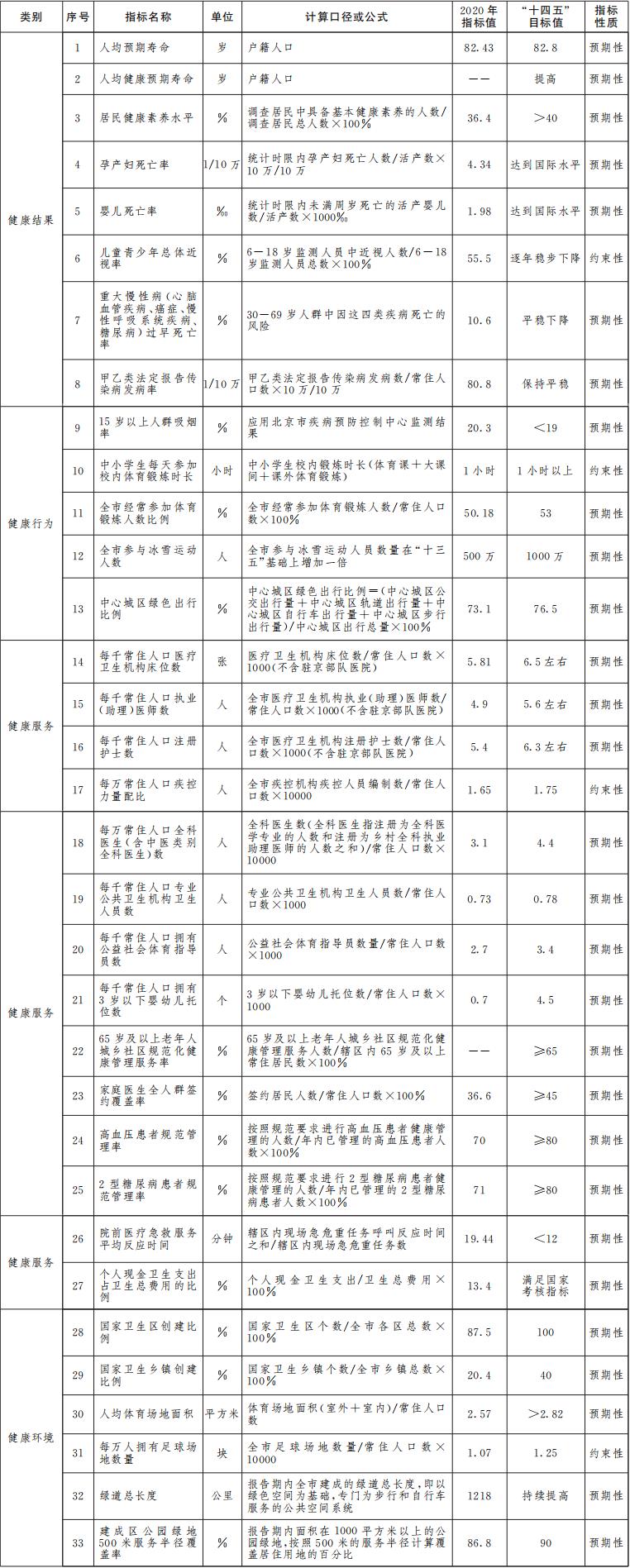
V. Main tasks
(A) to build a strong modern public health system
1. Reform and improve the disease prevention and control system
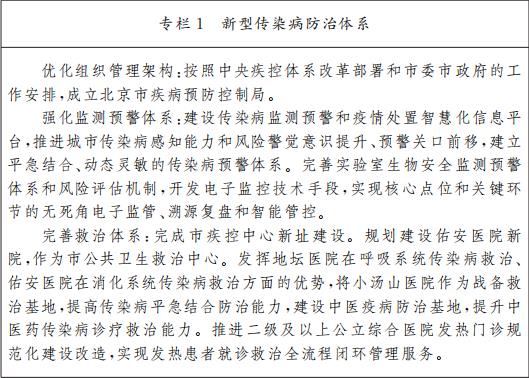
We will promote the reform of the disease prevention and control system in accordance with national requirements, and build a first-class modern disease prevention and control system in the capital that meets the needs of public health protection in the capital, has the ability to "determine" the pathogens of emerging infectious diseases and health hazards, and has the ability to deal with major public health incidents. We will continue to do a good job in the prevention and control of normalized epidemics, continuously improve the monitoring system for infectious diseases and public health emergencies, establish a multi-point trigger mechanism for intelligent early warning, and comprehensively apply geographic information and other technologies to improve the level of accurate prevention and control. Optimize the function setting of disease control institutions, straighten out the system and mechanism, and change from simply preventing and controlling diseases to comprehensively maintaining and promoting the health of the whole population. Improve the reform measures such as the management of disease control personnel and the salary guarantee mechanism, and study and formulate adjustment policies. By 2025, the proportion of disease control forces per 10,000 permanent residents will be 1.75. Improve the infrastructure conditions of disease control institutions, build a new site of the Municipal Center for Disease Control and Prevention, make overall use of the existing office space of the Municipal Center for Disease Control and Prevention, strengthen the public health guarantee in the core area, appropriately improve the equipment configuration standard according to the development needs of the capital, and accelerate the standardization construction of the municipal and district centers for disease control and prevention. Strengthen the capacity building of the third-level laboratory for biosafety protection, and make overall plans for the central resources to set up high-level biosafety laboratories.
2. Build a new infectious disease prevention and control system.
We will build a new infectious disease prevention and control system that conforms to the functional orientation of the capital and the characteristics of an international metropolis, give full play to the role of general hospitals as the main force, strengthen the capacity building of infectious diseases specialties in general hospitals, and enhance the ability of diagnosis and treatment of difficult and severe diseases and the ability of multidisciplinary cooperation in comprehensive diagnosis and treatment services. Optimize and upgrade the functional orientation of specialized infectious disease hospitals, and usually undertake the functions of diagnosis and treatment of difficult and critical diseases, tackling key clinical technical research problems of infectious diseases, and promoting the transformation of scientific research results; During the epidemic period, as a support and supplement to the diagnosis and treatment of general hospitals, patients with rare infectious diseases and new major infectious diseases are treated; Optimize and upgrade the facilities and equipment of specialized infectious disease hospitals, improve the international service capacity, and realize functional transformation and upgrading. Give full play to the core technical role of Chinese medicine in the prevention and treatment of infectious diseases, and build Chinese medicine disease prevention and control bases in Beijing Hospital of Traditional Chinese Medicine and Dongzhimen Hospital of Beijing University of Chinese Medicine based on the construction of national Chinese medicine disease prevention and control bases. By 2025, the number of national Chinese medicine disease prevention and control bases will reach 2-3, and national key research laboratories and key laboratories will be built. Promote the application of integrated traditional Chinese and western medicine diagnosis and treatment program for infectious diseases, and improve the ability of diagnosis and treatment of infectious diseases in traditional Chinese medicine.
Strengthen the integration of medical care and prevention, implement the public health responsibility of medical institutions, and incorporate the public health responsibility of medical institutions into the hospital grade evaluation index system and the annual performance appraisal of medical institutions. Establish a business support platform for scientific research cooperation, business training, pathogen inspection and identification, and information exchange and sharing, and form a trinity working mode of "disease control-clinical-scientific research" relying on medical associations and health associations. Improve the standardized training program for residents and the professional title evaluation system for health professionals, and implement cross-training programs between public health institutions and secondary and tertiary medical institutions.
3. Improve the public health emergency management system.
Form a unified and efficient public health emergency command system. Improve the command and decision-making and organization and coordination mechanism, improve the emergency response system, and coordinate the response to public health emergencies in the capital. Improve the health emergency plan system, promote the construction of public health emergency management platform as a whole, make full use of modern information technology to improve the operational efficiency of command and decision-making system, information management system, emergency disposal system, material support system and expert consultation system, so that all systems are effectively connected, interconnected, information is quickly collected, scientific decision-making is supported in time, instructions are smooth and accessible, and all departments respond quickly and act accurately.
Improve the public health emergency service system. Establish a modern, professional and standardized comprehensive emergency medical rescue team to comprehensively improve the effective response ability of health emergency. Unified pre-hospital medical emergency call number, each street (township) set up at least one standardized first-aid workstation, the city’s first-aid stations increased to 465, equipped with necessary vehicles and equipment, enrich first-aid personnel, strengthen the combination of first-aid stations with general hospitals and community health service institutions, standardize the connection between pre-hospital medical first-aid transfer and in-hospital first-aid, and improve the capacity and efficiency of safe transfer. The average response time of pre-hospital medical emergency service is less than 12 minutes, the emergency call satisfaction rate is not less than 95%, and the service satisfaction rate is not less than 98%.
Strengthen the public health emergency security system. Improve the "city-district-institution" three-level medical materials and equipment reserve system, build a public health and safety emergency support base, and establish a rotation storage system for materials with service life in conjunction with material production enterprises and demand units. Strengthen the construction of social first aid capacity, and realize full coverage of first aid facilities and equipment such as AED in key public places in the city. Formulate a plan for converting large public buildings into emergency facilities and a list of public buildings that can be temporarily requisitioned. One or two public buildings in each district can be converted into centralized medical isolation observation points, shelter hospitals or backup relief and disaster relief places in case of emergency. Improve the ability of blood support, and build a "1+3+7" blood collection and supply service system including one blood center, three central blood stations and seven central blood banks. During the Tenth Five-Year Plan period, the blood donation rate of thousands of people reached 20‰.
(2) Building a high-quality and efficient medical service system.
1. Balanced distribution of high-quality health resources
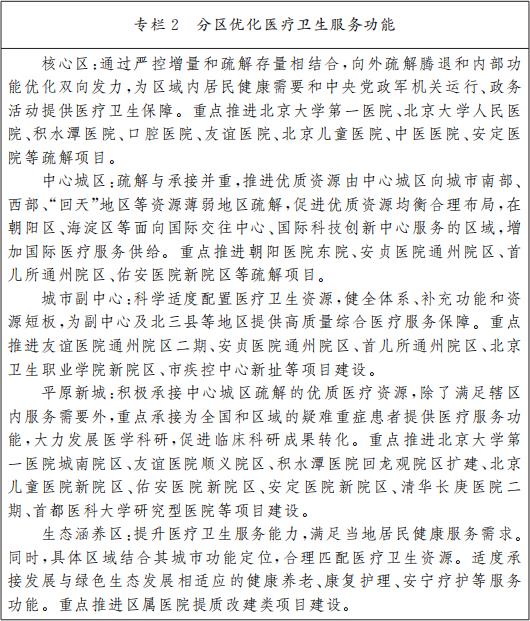
Implement the "Beijing Urban Master Plan (2016-2035)", combine urban functions and population distribution, promote the balanced layout of high-quality medical and health resources, optimize the structure, improve quality and efficiency, and better serve the health needs of the people. Cooperate to promote the relief of central hospitals. According to the list of relief projects determined by the central government, we will work together to promote the relief of some central hospitals outside Xiang Jing, a tertiary hospital in Beijing. Promote the balanced distribution of regional medical and health resources. In accordance with the principle of increasing or decreasing the linkage, we will promote the medical resources in the central city to the areas with weak resources in an orderly manner. Strictly control the size of the project beds and buildings, and reduce the size of the existing beds. Promote the upgrading and reconstruction of some district hospitals. Combined with district planning and population distribution, the service capacity of district hospitals will be improved, and the resource gap will be filled in the fields of rehabilitation nursing, mental health, maternal and child health care and traditional Chinese medicine.
2. Strengthen the construction of national medical centers and regional medical centers.
Support the construction of national medical centers for cancer, cardiovascular disease, geriatrics, respiration, children, trauma, stomatology, infectious diseases and neurological diseases, strive for the establishment of national medical centers for psychiatry, orthopedics and general medicine in Beijing, and support municipal hospitals to establish national medical centers. Improve the level of the National Medical Center in the diagnosis and treatment of difficult and critical diseases, the training of high-level medical talents, the transformation of high-level basic medical research and clinical research results, smart medical care, solving major public health problems, and hospital management. Relying on the construction of national medical center, we will promote the interconnection of information and data across regions and institutions. Create a medical center that represents the top level in the country, plays a leading role and is competitive in the world. For export hospitals undertaking the task of building national regional medical centers, we should focus on strengthening the construction of business premises, purchasing medical equipment, building information and scientific research platforms, establishing telemedicine and education platforms, speeding up the intelligent transformation and upgrading of diagnosis and treatment equipment, and giving play to the role of regional medical and health service system. According to the needs, we will promote the planning and layout of regional medical centers in each district, strengthen the functions of diagnosis and treatment of common diseases, frequently-occurring diseases and chronic diseases, emergency rescue, referral of difficult diseases, training of primary medical and health personnel, and let the people enjoy fair, accessible and systematic health services such as prevention, treatment, rehabilitation and health promotion nearby.
3. Optimize and adjust the service structure
Fill in the shortcomings of disciplines such as obstetrics and gynecology, pediatrics, psychiatry, cancer, old age, rehabilitation, and long-term care. Promote the standardization of maternal and child health hospitals and improve the service capacity of obstetrics and gynecology and pediatrics in general hospitals. Improve the geriatric medical service network with geriatric departments in geriatric hospitals and general hospitals as the core, basic medical and health institutions as the foundation, and relevant teaching and research institutions as the support. Encourage and guide some secondary hospitals and old-age care institutions to actively transform into medical care, rehabilitation and rehabilitation institutions. By 2025, the proportion of geriatrics departments in secondary and above general hospitals will reach 70%, and at least one hospice care center will be set up in each district. The number of beds providing hospice care services in the city will reach 1,800. By 2025, there will be 8.2 licensed (assistant) psychiatrists for every 100,000 permanent residents.
4. Accelerate the construction of a graded diagnosis and treatment system.
Strengthen the construction of close medical associations and specialized medical associations, promote the pilot work of health associations, speed up the expansion and sinking of high-quality medical resources, strengthen the functions of community appointment registration and referral services, classify and refine the sinking system of number sources in large hospitals, and expand the sinking ratio of number sources. By 2025, the appointment rate of municipal hospitals will be greater than 90%, and the proportion of primary consultations will reach 55%. Strengthen the allocation of primary medical and health institutions. By 2025, according to the standard of setting up one community health service center in each street (township) and the principle of setting up one community health service station in every two communities, and according to the block setting and population density, promote the rational layout of community health service centers and community health service stations, and realize the dynamic full coverage of community health service institutions. Explore the reform of medical insurance payment system based on medical association and health association, and do the "first diagnosis at the grassroots level".
5. Improve the Chinese medicine service system.
We will build a Chinese medicine service system that integrates prevention, treatment, health care and rehabilitation with national and municipal Chinese medicine medical centers as the leader, Chinese medicine medical institutions at all levels and departments of other medical institutions as the backbone, and grassroots medical and health institutions as the foundation. During the "Fourteenth Five-Year Plan" period, at least one national traditional Chinese medicine medical center was established, more than three national regional traditional Chinese medicine medical centers and more than three national traditional Chinese medicine inheritance and innovation centers were established. Popularize a number of intervention programs for prevention and treatment of diseases in traditional Chinese medicine, and the proportion of prevention and treatment departments in public Chinese medicine hospitals has reached 95%. Create a 10-minute health service circle with Chinese medicine characteristics. Focus on the core technology of traditional Chinese medicine, tackle more than 50 kinds of difficult and advantageous diseases in traditional Chinese medicine specialty, and form a hard-core technology system in traditional Chinese medicine specialty. Strengthen the construction of "flagship" hospitals, "flagship" departments and "flagship" grass-roots medical and health institutions that coordinate Chinese and Western medicine. The proportion of grass-roots Chinese medicine services to the total Chinese medicine services has reached more than 50%, and the proportion of non-drug therapies provided by township hospitals and community health service centers has reached 100%. Develop and expand the service circle of Chinese medicine in urban and suburban areas, guide the development direction and construction focus of different regions by classification, and form a spatial pattern of Chinese medicine development with "one area, one positioning, one area and one brand", dense density, division of labor and cooperation, and perfect functions.
6. Promote the sustainable and standardized development of social medical services.
Guide and encourage social forces to set up medical institutions. In addition to the core area, other areas will be combined with key functional areas such as CBD, Embassy District and Lize Business District, as well as the airport economic zone of Daxing International Airport and the "three cities and one district" and other areas to comprehensively utilize medical and health land or other compatible land to develop social medical institutions. Reserve planning space for social medical institutions according to 1.5 beds per thousand permanent residents. Reduce the institutional cost of social forces to run medical institutions and create a fair, just, standardized and transparent development environment. Guide the dislocation and coordinated development of social medical institutions and public medical institutions. Implement the clinic filing system and encourage experienced medical practitioners to open clinics. Research and promote the inclusion of clinics in the designated scope of medical insurance outpatient co-ordination. Improve the third-party service support system, standardize and guide social forces to set up non-profit medical institutions such as rehabilitation medical centers and nursing centers, and independently set up medical institutions such as medical laboratory, pathological diagnosis center, medical imaging center and hemodialysis center with chain and group operation, and encourage the establishment of social pharmacies.
7. Developing the international medical service system
Taking the pilot medical institutions of international medical service as the starting point, we will explore and innovate in management team, standards, service content, talent introduction, clinical application of imported drugs, commercial insurance connection, etc., open up the blocking points and difficulties of international medical service, and promote the improvement of international medical service capacity and level. Support the planning and construction of international hospitals in key areas such as "three cities and one district", Chaoyang District and Daxing International Airport. Encourage foreign capital and social capital to invest in the development of international medical care. Promote the construction of international medical associations and international community hospitals, encourage the construction of small and medium-sized high-level international clinics, and provide high-quality international medical services. Allow public medical institutions to appropriately supplement international medical resources, support public hospitals to tap their potential reasonably in areas with international medical service needs, and set up and develop international medical departments within the proportion allowed by the state.
8. Intensify the innovation of service mode.
Adhere to the patient-centered, vigorously promote new service models such as multidisciplinary diagnosis and treatment (MDT), team diagnosis and treatment, daytime diagnosis and treatment, and holistic nursing. Encourage qualified hospitals to set up day wards, day treatment centers, etc., to provide patients with services such as day chemotherapy and day irradiation treatment, improve the efficiency of bed units, and shorten the time for patients to wait for hospitalization and surgery. A number of Internet hospitals and smart hospitals that play a leading role in demonstration will be built to form an online and offline integrated medical service model. Encourage grassroots medical and health institutions to use the Internet platform to expand the "smart family doctor" service on the basis of doctors signing contracts. Accelerate the intelligent development of health management, health care and other services, and do a good job in optimizing and upgrading smart women and children, smart pre-hospital first aid, and population and family systems. Formulate unified professional pharmaceutical service standards, deepen drug consultation outpatient service in tertiary hospitals, promote the sinking of pharmaceutical service in medical associations, enhance the ability of grassroots pharmacists, and improve the rational drug use level of residents.
9. Deepen the reform of the medical and health system and mechanism.
Improve the governance mechanism of public hospitals. Adhere to and strengthen the Party’s overall leadership over public hospitals. Fully implement the president responsibility system under the leadership of the party Committee and improve the rules of procedure and decision-making. We will further improve the system of selecting, appointing and training leaders in public hospitals, and scientifically select and employ the helm with both ability and political integrity to lead the high-quality development of public hospitals. Establish and improve public welfare-oriented performance appraisal methods and strengthen the application of assessment results, focusing on medical quality, operational efficiency, sustainable development, satisfaction evaluation and other contents, linking assessment results with financial investment, medical insurance payment, performance pay and so on, and strengthening the role of performance appraisal.
Improve the operation and management system of public hospitals. Strengthen comprehensive budget management, strengthen cost accounting and cost control, promote the effective allocation and use of resources, and ensure the scientific, standardized and refined operation and management of hospitals. We will continue to deepen the reform of the salary system in public hospitals, promote the implementation of the requirements of "two permits" in medical and health institutions (allowing medical and health institutions to break through the current wage control level of public institutions, allowing medical service income to deduct costs and withdraw various funds according to regulations, which will be mainly used for personnel rewards), scientifically and reasonably determine and dynamically adjust the salary level of public hospitals, optimize the salary structure, and focus on clinical frontline, key and scarce posts, high-risk and high-intensity posts, high-level talents, business backbones and medical personnel who have made outstanding achievements.
Optimize the compensation mechanism of public hospitals. Deepen the reform of medical service price, establish a scientific and sensitive price dynamic adjustment mechanism, and constantly improve and optimize the structure and price comparison relationship of medical service items. Deepen the reform of centralized procurement system for drugs and medical consumables. Strengthen the performance management of government investment, and explore a more scientific and reasonable financial classification compensation mechanism and financial subsidy performance evaluation system for public hospitals. We will continue to further promote the reform of DRG, study and try out the per-head payment for chronic diseases such as diabetes and hypertension in primary medical institutions, and explore the packaged payment method of compact medical associations.
(C) to create a safe and livable healthy environment
1. Comprehensively improve the living environment.
Inherit and carry forward the fine tradition of the patriotic health campaign, incorporate the patriotic health campaign into the working mechanism of "whistle for reporting" and the category of spiritual civilization construction, closely combine it with the prevention and control of infectious diseases and chronic diseases, and continue to carry out mass patriotic health campaigns such as "weekend health day" and "patriotic health month" to promote the patriotic health campaign to integrate into people’s daily lives. We will improve the environment of back streets and alleys, strengthen the management and protection of public health infrastructure, do a good job in garbage classification and source reduction, strengthen comprehensive social management and industry supervision, and improve the environmental quality of urban and rural areas. Strengthen the construction of centralized medical waste treatment facilities and improve the medical waste disposal capacity. Practice the concept of green health, closely combine healthy city planning and design with architectural design, and provide users with comfortable, healthy, low-consumption and harmless space. By 2025, the city’s sewage treatment rate will reach 98%, and the water quality of centralized drinking water sources such as Miyun Reservoir will reach the standard steadily. Harmless sanitary household toilets are basically popularized in rural areas. Achieve full coverage of national health areas, and the proportion of national health towns and villages has reached more than 40%.
2. Create a healthy and civilized tobacco control environment.
Effectively implement the "Regulations on Smoking Control in Beijing" and strengthen the main responsibility of various departments and units for tobacco control in their own industries and units. Focusing on the construction of smoke-free party and government organs, we will continue to promote the construction of smoke-free environment in tobacco control demonstration units and play a leading role in tobacco control demonstration. Continue to carry out extensive tobacco control publicity, and further improve the awareness of the whole society on the harm of tobacco and the awareness of citizens to abide by the law. Strict tobacco control supervision and law enforcement, adhere to both daily supervision and law enforcement and centralized special law enforcement, handle tobacco control complaints and reports in a timely manner, and actively respond to people’s demands for tobacco control. Continue to promote standardized smoking cessation clinics, smoking cessation hotlines, and short clinical smoking cessation intervention services to enhance public awareness of scientific smoking cessation. To carry out monitoring and evaluation of tobacco control effect, and regularly release the monitoring results to the society.
3. Strengthen food safety
Develop and build a comprehensive information platform for food safety. Realize data integration, timely analysis and information sharing of standards, monitoring, evaluation and communication. Improve the risk identification ability of food pollutants, improve the traceability technology and platform of food-borne diseases, and master the epidemic characteristics of food-borne diseases in the food chain. Establish and improve Beijing food consumption database. Establish a food safety risk monitoring and evaluation team with disease control institutions as the main body and third-party institutions as the supplement. Set up an expert committee on food safety risk assessment in Beijing to do a good job in food safety risk assessment for the 2022 Beijing Winter Olympics and Paralympic Winter Games.
4. Optimize the healthy environment of the school
The facilities and conditions of primary and secondary school campus education (classroom lighting and lighting, desks and chairs, blackboards, etc.) should meet the requirements of relevant national documents and norms, and provide students with a learning environment that meets the requirements of eye hygiene and is conducive to growth and development. Strengthen the management of meals and drinking water inside and outside the school, so that every student can eat safe and nutritious "warm-hearted meals" and drink safe and clean "safe water". Strengthen the construction of kindergarten health care rooms, primary and secondary health care institutions, health care doctors and school doctors, and fully equip health professional and technical personnel. Carry out the patriotic sanitation campaign on campus in the new era, consolidate the achievements of the "toilet revolution" and improve the campus environmental sanitation.
5. Strengthen occupational health management and service.
Employers earnestly implement the main responsibility of occupational health and actively improve the working environment of workers. Overall planning of the city’s occupational disease prevention and control resources, using various engineering and technical means to prevent, control and eliminate occupational disease hazards. Take the initiative to declare occupational disease hazards, regularly carry out occupational disease hazards detection and occupational health examination in the workplace as required, implement the requirements of the People’s Republic of China (PRC) Law on the Prevention and Control of Occupational Diseases and other laws and regulations on employers, and urge all institutions to carry out occupational disease prevention and control work according to law. Promote the informatization construction of occupational disease prevention and occupational health management in the city, establish basic files of employers with serious occupational disease hazards, implement classified management, carry out various monitoring and research on workers exposed to occupational disease hazards, monitor the living conditions of pneumoconiosis patients, build a technical system for classification, classification, prediction and early warning of occupational disease hazards, improve the effectiveness of occupational disease hazard risk monitoring and prediction and early warning, and achieve full coverage of occupational health monitoring of employers in key industries.
6. Continuously improve the natural ecological environment
Form an urban ecosystem with ecological conservation areas as the barrier, forests as the main body, rivers as the context, farmland and lakes as the embellishment, and rich biodiversity. In-depth fight against pollution, strengthening the coordinated control of air pollutants and greenhouse gases, coordinating water pollution prevention and water ecological protection, and fully implementing soil pollution prevention and control, the ecological environment quality was further improved during the 14 th Five-Year Plan period. Do a good job of leaving blank space and increasing greening. By 2025, the service radius coverage rate of 500 meters of park green space in the built-up area will reach 90%, and the total length of urban greenways will continue to increase, so that citizens can truly feel the improvement of the ecological environment.
7. Maintain the traffic safety environment
Create a safe, environmentally friendly and healthy traffic ecology. Improve road safety facilities, strengthen traffic safety supervision and management, advocate civilized travel, control vehicle speed, slow down and reduce traffic accidents. Vigorously promote the opening of parks and greenways to city slow traffic system, make full use of greenway resources, and build a running and cycling system for leisure and fitness. Redistribute the road space resources around the track, increase the slow-moving space, improve the current slow-moving connection environment around the track site, and create a convenient, safe, comfortable and pleasant slow-moving environment. By 2025, the proportion of green travel in the central city will reach 76.5%. Improve barrier-free transportation facilities and build a more friendly transportation environment for children, the elderly and the disabled.
8. Enhance the safety management level of sports industry.
Improve the safety management system and mechanism of sports industry, and pay attention to strengthening the construction of safety management team. Strengthen the identification and evaluation of safety risks in the sports industry, do a good job in the prevention and management of high-risk sources, strengthen pre-plan drills, and continuously improve the ability of risk prevention and control. Adhere to the investigation and treatment of hidden dangers in the sports industry, continue to carry out safety training and law enforcement inspection, compact the main responsibility of safety management of sports industry business units, urge the territorial implementation of regulatory responsibilities, and improve the safety service level of the sports industry. Vigorously strengthen the construction of industry safety management standards and norms, and guide the development of sports industry safety norms.
(D) Cultivate healthy people
1. Improve the health literacy of the whole people
Improve the national health education system and improve the health education network. Construction of health education bases at all levels, health education services for primary and secondary school students, employees, floating population, community residents and other groups. Strengthen the construction of health education team, improve the expert database of health science at city and district levels, and provide scientific, standardized, convenient and practical health science resources to the society based on the needs of the masses. Encourage the integration of media platform construction and product innovation, continuously enhance the convergence ability of network platforms, give full play to the advantages of new media platforms, continuously expand the coverage and influence of new media, and accurately and effectively disseminate health knowledge to the public. Advocate the establishment of a correct outlook on life and medicine, guide the public to rationally look at the limitations of medical technology and the diversity and complexity of unknown medical fields, and cultivate scientific medical habits.
2. Promote the development of healthy behaviors
Continue to promote the "three reductions and three health" special action and the national healthy lifestyle action. Carry out follow-up evaluation of nutrition standards and food safety standards. Under the guidance of healthy dietary guidelines, strengthen nutritional intervention and guidance for malnourished people, and formulate healthy dietary guidelines for key people. Encourage schools to create healthy canteens and cultivate students’ good eating habits. Carry out the construction of a demonstration community for nutrition promotion, provide nutrition instructors in the community, and provide nutrition guidance and consultation for community residents, including Chinese medicine diet and dietotherapy.
3. Strengthen physical and health integration and non-medical health intervention.
Establish guidance methods for sports to promote health for different people, different environments and different physical conditions, and promote the formation of a disease management and health service model integrating sports and health. Promote the integration of sports and health services to the grassroots coverage. Promote sports intervention projects and methods for common chronic diseases, encourage medical institutions to provide guidance services for sports to promote health, encourage and guide social sports instructors to provide scientific fitness guidance services for the masses in fitness places, improve fitness effects and prevent sports injuries. Promote the theoretical, scientific and practical innovation of the integration of sports and health, issue a guide to physical fitness activities, and establish a long-term mechanism for national fitness volunteer service. Actively implement the "National Physical Exercise Standards", focus on young people to carry out national physical fitness monitoring and intervention, establish a national sports level rating standard and evaluation system, and encourage the inclusion of national physical fitness measurement in health examination items.
(five) the implementation of the national strategy of strengthening the country by sports and fitness for all.
1. Build a high-level public service system for national fitness.
Give full play to the role of the joint meeting of the national fitness work at the municipal and district levels, and earnestly fulfill the government’s responsibility for public sports services. Closely following the goal of "seven haves" and the demand of "five natures", we will create demonstration streets for national fitness and towns with sports characteristics, improve the selection index system and selection methods, and strengthen the standardized construction, refined management and precise service of grassroots national fitness work. Starting from safeguarding the basic sports rights and interests of the masses, enhancing physical fitness, promoting health and improving people’s livelihood, we will build a national fitness public service system covering urban and rural areas, facilitating the people and benefiting the people, and continuously developing and improving the level of national fitness public service. The proportion of people who regularly participate in physical exercise in the city reaches 53%, and the life-oriented sports theme activities are more diverse.
2. Continuously improve the ability to win glory for Beijing and the country.
Improve the development model of competitive sports in Beijing and form a diversified new pattern of national system, integration of sports and education and overall development of social organizations. Optimize the layout of competitive sports, enlarge and strengthen key Olympic events such as table tennis, diving, gymnastics and badminton, rapidly upgrade basic events such as track and field, swimming, cycling and water sports, and gather and train a group of coaches with international vision, innovative thinking and high coaching level. Deepen the reform of the "three big balls" project, push the competitive level to a new level, and constantly create good results in the National Games and professional leagues. Strengthen the upgrading of venues and facilities of municipal training units, speed up the construction of compound training teams of sports teams, comprehensively improve the training quality and competitive level, train and transport more competitive sports talents for the country, and achieve excellent results in major competitions such as the Olympic Games and the National Games.
3. Create a good environment for adolescent health sports.
Continue to promote the integration of sports and education, firmly establish the educational concept of "health first", strengthen the construction of traditional sports schools and youth sports clubs, and connect the training and transportation channels for young sports reserve talents. Accelerate the reform of sports schools and build them into a youth sports training activity center integrating amateur training, skill training, physical education class service and after-school exercise. We will continue to improve the system of youth sports events and encourage social forces to participate extensively in youth sports training and the cultivation of competitive sports reserve talents. Seize the opportunity of the Winter Olympics and vigorously develop youth ice and snow sports. Constantly improve the youth sports service system that combines winter and summer, with the joint efforts of schools, sports schools and society.
4. Promote the development of ice and snow sports to a new level.
Relying on the Beijing ice training base, we will promote the co-construction of national training teams for snowmobiles, sledges and other projects, unite with strong ice and snow provinces, train a number of outstanding athletes in short track speed skating and other projects, and do our best to prepare for and guarantee the 2022 Beijing Winter Olympics and Winter Paralympics. Efforts will be made to create high-quality ice and snow events with wide participation of the public, such as the happy ice and snow season, and no less than 10 municipal ice and snow events will be held every year. Establish and improve the U series competition system of Beijing youth ice and snow events, integrate traditional sports schools, support ice and snow sports schools, actively develop campus ice and snow sports, and cultivate high-quality ice and snow sports reserve talents.
5. Popularize and improve the "three big balls" movement.
Extensively carry out mass sports activities of "three big balls" and form a strong fitness atmosphere of "three big balls". Improve the "three big balls" competition system that combines professional events, youth events and social events. Promote the market-oriented construction of the "three big balls", standardize the professional development path of the league, enhance the brand value and profitability of the professional league, and make the organization and competition level of the "three big balls" professional league reach the first-class level in Asia. Strengthen the construction of "three big balls" and "3+3+3" projects at the district level. Vigorously cultivate amateur "three-ball" clubs and encourage schools to develop students’ "three-ball" clubs.
6. extensively carry out national fitness events.
Adapt to the needs of normalized epidemic prevention and control, innovate the online and offline integrated national fitness activity model, and promote the popularization, regularization and diversification of mass fitness activities. Taking brand events such as "Hundred Teams Cup" as the starting point, we will guide social forces to participate in sports events and build a platform for mass "three big balls" events. We will extensively carry out non-Olympic sports such as martial arts, health qigong, dragon boat and kite, and increase the popularity of non-Olympic sports. Actively carry out sports for the elderly, women and children, and promote the development of rehabilitation sports and fitness sports for the disabled. We will extensively carry out campus sports competitions and improve the youth sports competition system. Hold at least 500 mass sports events at or above the municipal level every year to ensure that "the masses have activities every day, communities (villages) have sports events every month, and streets (towns) have sports meetings every year".
7. Coordinate the construction of sports venues and facilities.
Adhere to the government-led, problem-oriented, first-good standards, and local conditions, tap the potential of land supply, make full use of resources such as free space and urban "Jinjiao Yinbian", plan and build convenient mass sports facilities, speed up the reconstruction and reconstruction of workers’ stadiums, promote the construction of key projects such as green heart sports facilities in urban sub-centers, workers’ gymnasiums, "Three Big Balls" youth training bases and Beijing Swimming School, and upgrade and transform the venues of intelligent training bases step by step. During the "Fourteenth Five-Year Plan" period, 380 social football fields were built in the city, and the per capita public sports land area increased significantly. The per capita sports ground area reached more than 2.82 square meters, and the number of football fields per 10,000 people reached 1.25.
8. Create high-end events to help build an international exchange center.
Taking the opportunity of preparing for the 2022 Beijing Winter Olympics and Paralympic Winter Games, we will do our best to prepare for the 2023 AFC Asian Cup (Beijing Division) and constantly promote the upgrading of China Tennis Open, Beijing Marathon, Beijing International Long-distance Running Festival-Beijing Half Marathon and other events. Focusing on Beijing’s dominant sports, the brand construction of "one district, one product" for mass international brand events will be carried out around key areas such as the city sub-center, the Olympic Central District, the new Shougang Park and the Yanqing Winter Olympic Stadium Group. Focus on strengthening exchanges and cooperation with sister cities, host cities of the Olympic Games and countries and cities along the Belt and Road, give full play to the leading role of international sports events, create a number of international brand events with characteristics, good results and great international influence, and promote international exchanges and people’s hearts.
(6) Create a healthy culture
1. Promote the development of humanities and social sciences in the health field.
Support the development of humanities and social sciences research in the field of health, encourage the development of bioethics, health law, health sociology and other disciplines, and improve the humanistic quality of the health talent team in the capital. Building a high-end think tank in the field of humanities and social sciences will provide high-quality research support for solving social, ethical and legal problems faced by the development of contemporary medicine, health services and health undertakings. Deepen the integration of medical science and humanities and social sciences, and accelerate the transformation of research results through social policies, management systems, service models and public opinion atmosphere.
2. Encourage literary and artistic creation on the theme of health.
Adhere to the people-centered creative orientation, support and encourage the creation of literary and artistic works closely related to the theme of healthy Beijing and loved by the people, and encourage the holding of various health programs. Focus on the theme of the times, publicize the major strategic thoughts, principles and policies of the party and the state to safeguard and promote people’s health, vigorously carry forward the great anti-epidemic spirit and the new era medical and health professional spirit of "respecting life, saving lives and healing the wounded, being willing to contribute, and loving the country without borders", deeply publicize advanced deeds and model of the times, and form a good atmosphere of respecting doctors and attaching importance to health in the whole society.
3. Do a good job in propaganda and guidance of health culture.
Intensify propaganda and public opinion work, integrate propaganda work into the overall situation of the cause, and carefully organize theme propaganda, policy propaganda, achievement propaganda, typical propaganda and popular science propaganda around the major arrangements and key tasks of building a healthy Beijing during the 14 th Five-Year Plan period, so as to continuously consolidate and expand mainstream ideological public opinion and provide strong ideological guarantee and strong spiritual motivation for building a healthy Beijing. Incorporate news reports, public opinion monitoring and guidance, health tips, etc. into the daily work of relevant departments, regularly carry out business ability training, and steadily improve publicity ability and media literacy. Give play to the leading role of example and boost the spirit of the industry.
4. Carry out cultural practice creation activities for healthy Beijing construction.
Strengthen the medical humanistic quality and professional ethics education of medical staff, and form a common ideal, belief and value pursuit. Carry out medical social work to solve psychological and social problems caused by diseases for patients and their families, enhance medical humanistic care and improve medical humanistic environment. Improve the prevention and handling system of medical disputes, optimize the medical treatment process, improve the medical treatment experience, and reduce the occurrence of medical disputes from the source. Unswervingly promote the anti-corruption construction of the whole system, severely crack down on all kinds of illegal acts, and create a clean and honest industry environment. Continue to strengthen the construction of "Ping An Hospital" and strengthen the construction of hospital security forces and facilities.
5. Promote the popularization of Chinese medicine health culture.
Carry out the project of improving the cultural literacy of traditional Chinese medicine and build a pilot base with community colleges as the core. Create a large-scale theme activity cluster of traditional Chinese medicine popular science culture represented by Ditan Culture Festival. Encourage all districts to carry out cultural activities related to traditional Chinese medicine with local characteristics and advantages. Strengthen the connotation construction of traditional Chinese medicine cultural tourism demonstration base. Continue to deepen the investigation of cultural resources of traditional Chinese medicine in Beijing, and comprehensively and systematically sort out the content, inheritance and development of cultural resources of traditional Chinese medicine in Beijing. Continue to promote Chinese medicine culture into the campus. Accelerate the construction of the second phase of Beijing Digital Museum of Traditional Chinese Medicine, and promote the pilot project of "showroom, experience room and transformation room" of Chinese medicine culture in medical institutions. Establish a model of cultural self-confidence of the master of traditional Chinese medicine and the master of traditional Chinese medicine in the capital. Realize the construction of traditional Chinese medicine heritage studio and the construction of traditional Chinese medicine cultural tourism base.
6. Carry forward the Chinese sports spirit
Carry forward the Chinese sports spirit with the spirit of women’s volleyball in the new era as its main feature, and highlight the socialist core values in the sports field. Strengthen the education of Olympic spirit, Chinese sportsmanship and sportsmanship, innovate the way of publicity, strengthen the guidance of public opinion, and integrate sports culture into the cultural construction of the capital city around building the business card of "Double Olympic City". Tell the story of Beijing sports well, make sports an important carrier to spread positive energy and carry forward the main theme, create a healthy and upward social atmosphere, achieve a win-win situation between the Olympic movement and urban development, and show the style of a big country’s capital and the unique charm of Chinese culture.
(7) Strengthen the integrated development of health services and population social services.
1. Organize and implement the three-child birth policy according to law.
Improve the population monitoring system, actively promote cross-departmental information sharing, improve the level of birth population monitoring, and strengthen the analysis of birth population situation and research on related population issues. Implement the three-child birth policy and supporting measures, and do a good job in tracking and evaluating the implementation effect. In-depth study of influencing factors, constantly improve the public service and policy support system to support family fertility, implement supporting measures such as maternity leave, maternity insurance, taxation, housing, education and employment, and reduce the cost of marriage, childbirth, parenting and education. Strengthen the publicity of the scientific concept of fertility for the society and key groups, encourage the masses to give birth according to the policy, and create a fertility-friendly social environment. Strengthen policy convergence and safeguard the legitimate rights and interests of family planning families.
2. Promote the development of infant care services.
Use a variety of policy means, mobilize resources through multiple channels, build a universal care service supply system, increase the supply of GSP care services, and configure and improve infant care service facilities according to the standard of not less than 4.5 places per thousand people. Standardize the registration and filing of nursery institutions, and establish a comprehensive supervision system for nursery institutions after the event. We will implement the action plan for the standardized construction of community children’s centers, set up an expert database of infant care in Beijing, and provide online and offline public welfare scientific parenting guidance services for school-age families in this city. Encourage employers to adopt flexible working hours and other measures to create convenient conditions for family infant care. Study and formulate the qualification standards for all kinds of employees in infant care services, and establish a training and management system for employees in nursery institutions. All kinds of public places are equipped with maternal and child facilities in accordance with regulations.
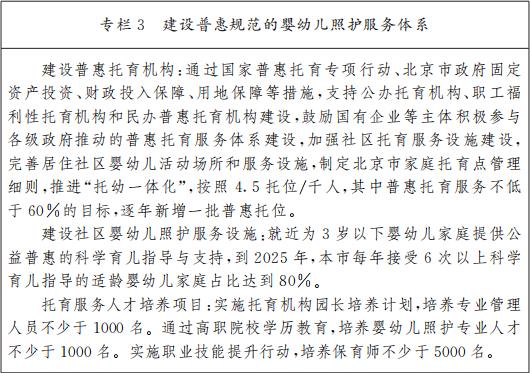
3. Optimize the whole service of maternal and child health.
Promote the health of pregnant women. Provide basic medical and health care services for the whole process of childbirth, strengthen the standardized construction and management of maternal and child health care institutions, and improve the comprehensive early warning network. Establish a modern safe delivery service mode in delivery room, improve the rapid response ability of midwifery team and the homogenization level of critical pregnant women’s treatment. Multi-disciplinary cooperation to provide accurate and refined services for pregnant women. Promote a new model of consulting and one-stop maternal and child health care services. Create a special service center for pregnancy and childbirth, an international maternal and child health exchange and service center, and a modern maternal and child health training platform.
Protect children’s health. Multi-departments jointly improve the comprehensive prevention and control network of birth defects to achieve the goal of eliminating mother-to-child transmission of AIDS, syphilis and hepatitis B. Create an international children health exchange center. Carry out breastfeeding promotion actions, and build mother-infant friendly hospitals, high-quality service bases for early childhood development and healthy and friendly communities for children. We will further promote the integrated service of children’s physical and mental health prevention and treatment, and popularize appropriate technologies to deal with key health problems of children and adolescents.
Improve women’s quality of life. Carry out women’s life cycle health care services. Ensure that women of childbearing age have the right to informed choice of contraception and birth control, and prevent unwanted pregnancy. Improve the self-care awareness and quality of life of perimenopausal women, and extensively carry out menopausal health care services. Improve the two cancer screening network, optimize screening strategies, expand screening coverage, promote early diagnosis and treatment, and promote the pilot work of eliminating cervical cancer.
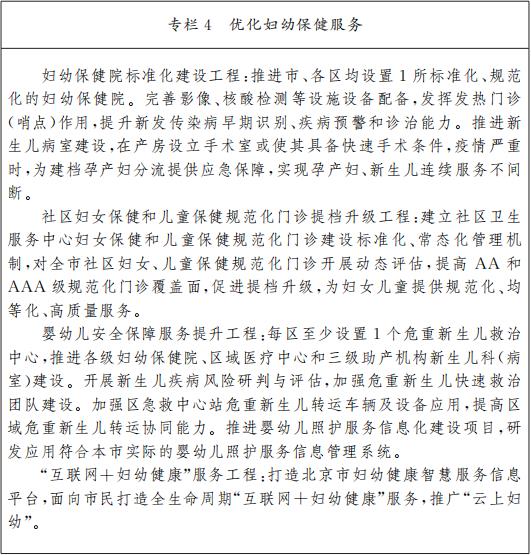
4. Improve the ability of health service for the aged.
Promote the construction of health guidance centers for the elderly and explore multidisciplinary diagnosis and treatment models for the elderly. The standard rate of standardized construction of health services for the elderly in community health service institutions reached 80%. The disabled elderly will be regarded as the key group of family doctors’ contracted services, and family beds and home visits will be actively carried out. The establishment of elderly friendly medical institutions will be carried out. By 2025, elderly friendly medical institutions will account for more than 80%. Establish and improve the elderly care service network supported by institutions, supported by communities and based on home. Improve the prevention-treatment-rehabilitation-nursing-long-term care-hospice care service chain. Carry out health literacy survey of the elderly, accurately grasp the basic situation of the elderly population, and provide health management services for the elderly. We will carry out pilot projects for prevention and intervention of disability and dementia in the elderly, strengthen social cognitive education and early screening of disability and dementia, and implement management of cognitive impairment in the elderly. Carry out the "wisdom to help the elderly" action to help the elderly cross the "digital divide." Further strengthen market supervision and standardize the development of health care and rehabilitation market for the elderly.
5. Improve the quality of rehabilitation nursing service.
Encourage different levels of medical institutions to carry out different types of rehabilitation services according to their ability and functional orientation, and explore the establishment of a whole-process rehabilitation system for acute, subacute and chronic rehabilitation. Encourage qualified medical institutions to explore new formats of "internet plus Rehabilitation Service". Support and guide social forces to set up large-scale and chained rehabilitation clinics, rehabilitation medical centers and rehabilitation hospitals. Encourage qualified primary medical institutions to set up and increase beds to provide rehabilitation services according to needs. Innovate the nursing service mode, comprehensively implement the holistic nursing of inpatient responsibility system in hospitals of all levels and types, and provide patients with the whole process, seamless, professional and convenient nursing service. Support qualified medical institutions to establish a hospital-community-family linkage mechanism to extend nursing services to communities and families.
6. Improve mental health and mental health services.
Improve the mental health medical institutions, community rehabilitation institutions, social organizations and families to link up the community rehabilitation service system for mental disorders. Improve the social and psychological health monitoring and early warning mechanism in the handling of major emergencies. Formulate the mental health service standard in Beijing, and all kinds of clinical medical staff should take the initiative to master mental health knowledge and skills and apply them to clinical diagnosis and treatment activities. Give full play to the role of "internet plus", strengthen the construction of mental health service volunteers, and provide convenient and accessible mental health services for the masses. Carry out mental health check-ups and brain health check-ups for Beijing residents. The standardized management rate of registered patients with severe mental disorders during the 14 th Five-Year Plan period reached over 95%. Improve the level of treatment policies for patients with severe mental disorders, and gradually add new drugs such as long-acting injections to the free medication list.
7. Optimize health services for the disabled.
Formulate and implement a disability prevention action plan, carry out disability prevention for the whole population and the whole life cycle, and establish a socialized disability prevention and control system. Improve the child disability reporting system and rehabilitation case management system to ensure that every disabled child receives timely and effective rehabilitation services. Do a good job in the settlement of medical expenses for severely disabled people and strengthen medical assistance for the disabled. Formulate rehabilitation service standards for community health service institutions, and promote community health service institutions to give priority to providing basic medical care, public health and health management services for the disabled. Strengthen the construction of rehabilitation and care facilities for the disabled, improve barrier-free facilities in medical institutions, and provide barrier-free medical services for the disabled. We will implement the policy of rehabilitation services for the disabled, improve the subsidy system for assistive devices for the disabled, and enhance their ability to take care of themselves and participate in society. By 2025, the coverage rate of basic rehabilitation services for disabled people in need will reach over 90%.
(eight) to promote the innovation and development of health industry.
1. Promote medical health innovation.
Support the construction of comprehensive and high-level national laboratories in the field of life sciences, strengthen collaborative innovation, focus on the prevention and control of major emerging infectious diseases, major chronic diseases, brain science and brain-like, cutting-edge key technologies and basic sciences in accordance with the national strategic scientific and technological tasks, and concentrate on tackling key core technologies to solve a number of "stuck neck" problems. Introduce new technologies and methods such as big data, blockchain, 5G and artificial intelligence to promote the integration and penetration of health-related disciplines and other disciplines. Establish a biosafety innovation technology system, and make new breakthroughs in theory and technology such as major biological risk perception, spread risk assessment, and epidemic early warning and prediction. Support the development of National Clinical Medical Research Center and Beijing Clinical Medical Research Center, guide and support the development of research hospitals and research wards, stimulate the vitality of scientific and technological innovation of medical institutions, continuously improve the clinical research and transformation capabilities, and realize that the number of international and domestic multi-center clinical trials led by this Municipality is leading in China.
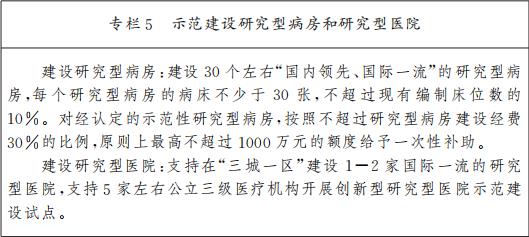
2. Promote the development of medical and health industry.
Establish a mechanism for the output, transformation and industrialization of medical innovation achievements to meet the needs of high-quality development. Encourage medical institutions and high-tech enterprises to jointly establish translational medicine centers in artificial intelligence, research and development of new drugs and devices, and jointly build demonstration parks and transformation bases for medical science and technology innovation industrialization with "three cities and one district" to promote the transformation of scientific and technological achievements of medical institutions. Promote the parallel development of pharmaceutical manufacturing and health services, and build a leading edge in new vaccines, next-generation antibody drugs, cell and gene therapy, and domestic high-end medical equipment. Support the research and development and application of new technologies and equipment such as artificial intelligence technology, medical robots, Internet of Things and wearable devices in the medical and health field. Encourage the development of health consulting, health training and other health industries. Integrate Chinese medicine science and technology and industrial resources, accelerate the transformation of Chinese medicine scientific and technological achievements, promote the integrated development of primary, secondary and tertiary industries of Chinese medicine, and accelerate the construction of key technologies and equipment in the whole industry chain of diagnosis, treatment, health care and rehabilitation of Chinese medicine. By 2025, the total operating income of the pharmaceutical and health manufacturing industry will reach 400 billion yuan.
3. Encourage the development of commercial health insurance.
Make full use of the personal income tax policy of commercial health insurance, and encourage the increase of the supply of new health insurance covering innovative drugs, high-end medical device applications, special medical care, disease prevention, prevention of diseases by traditional Chinese medicine, exercise and fitness and other intervention services. Accelerate the development of medical liability insurance and medical accident insurance. Support insurance institutions to develop liability insurance and operational insurance for nursery institutions. Encourage insurance institutions to meet the needs of consumers, provide comprehensive health products and services, and promote the integrated development of health insurance and health services.
4. Improve the new quality of national fitness.
Guide citizens to establish the concept of great health and develop active fitness habits. Promote the integrated development of sports and health, sports and education. We will continue to promote the opening of public sports facilities and school sports venues and facilities to the society. Innovate the organizational system and evaluation and incentive mechanism of national fitness events. Promote the construction of a municipal "national fitness service cloud" platform and improve the comprehensive service level of venues. Encourage the market to develop smart "cloud fitness" products and services to promote online and offline interactive integration.
5. Promote the new development of sports events
Strengthen cooperation with international sports organizations and high-level professional clubs, and encourage the introduction of top international commercial sports events. Support the construction and development of Beijing sports professional clubs, encourage the market development of professional clubs, cultivate the brokerage service ability of sports events, and accelerate the construction of the whole industrial chain of professional events. Innovating tournament culture, improving the quality of professional leagues, and building a "gold medal ball market" in Beijing. Support the deep combination of sports events and culture and entertainment, and promote the innovative development of sports competition performance industry. Encourage sports social organizations and market players to hold e-sports competitions.
6. Promote the new growth of sports consumption
Expand the development space of fine sports such as equestrian and fencing, build a sports industry system with fitness and leisure industry and competition performance industry as the leading factors, develop sports services such as sports intermediary consultation and sports product research and development, release the potential of sports consumption, and help build an international consumption center city. Encourage the development of water sports such as rowing, kayaking and sailing. Adjust and improve the consumption structure of sports lottery. Gather sports resources, develop night sports economy, and make "August 8 Beijing Sports Consumption Festival" a well-known domestic brand. Plan the development of Olympic heritage resources, support the holding of various sports exhibitions, improve the quality of products and services of sports enterprises, and expand the proportion of sports consumption structure of citizens in the capital. Adhere to the integration of sports and tourism, develop sports tourism projects, and jointly build the Beijing-Zhangjiakou sports and cultural tourism belt.
7. Promote new applications in high-tech sports.
Expand the application of new scenes to empower the development of sports industry with digitalization. Promote the integration of sports and media, promote the application of 5G, 8K, VR and other technologies in sports events, and build a digital sports industry. Promote the application of emerging technologies such as artificial intelligence, Internet of Things, and blockchain in the field of sports manufacturing, develop high-end intelligent sporting goods manufacturing, and build an intelligent sports industry cluster. Encourage the research and development of high-tech ice and snow sports equipment, and build an integrated industrial chain of ice and snow intelligent sports equipment. Encourage the construction of intelligent stadiums and launch a number of comprehensive projects with distinctive sports characteristics and perfect service functions. Innovate sports training formats and business models, and encourage the development of a number of intelligent fitness clubs and high-quality sports science and technology service brands.
(9) Deepen the coordinated development of health undertakings in Beijing, Tianjin and Hebei.
1. Deepen the development of regional medical and health integration.
Fully support the planning and construction of xiong’an new area. Build Xiong ‘an xuanwu hospital into a model of new district hospitals. Further promote the implementation of five municipal medical and health institutions such as xuanwu hospital, Maternity Hospital, Chinese Medicine Hospital, Municipal Center for Disease Control and Prevention, and Municipal Health Supervision Office. Promote the integrated development with the three northern counties in Langfang. Arrange China-Japan Friendship Hospital, anzhen hospital, Friendship Hospital, Chaoyang Hospital, Traditional Chinese Medicine Hospital, Chest Hospital, Tiantan Hospital, Children’s Hospital Affiliated to the First Children’s Hospital, Luhe Hospital, etc. to carry out support and cooperation with relevant medical institutions and pension institutions in North Three Counties, and jointly promote the improvement of health service capacity in North Three Counties. Promote cooperation in key medical and health projects in Beijing, Tianjin and Hebei. Strengthen cooperation with the area around Beijing, continue to promote support and cooperation with counterpart institutions in Zhangjiakou, Tangshan, Chengde, Langfang and Baoding, and promote the improvement of local medical and health services. We will promote the mutual recognition of clinical test results and the sharing of medical image examination data in medical institutions in Beijing, Tianjin and Hebei, explore and promote the direct settlement of medical expenses for medical clinics in different provinces in Beijing, Tianjin and Hebei, and ease the pressure on medical services and urban operation management in the capital.
2. Promote the coordinated development of Beijing-Tianjin-Hebei pension services
Integrate the policy resources of health and old-age care industries, open up preferential policies for the elderly and standards for old-age care services, and enhance the ability of Beijing-Tianjin-Hebei to cope with population aging. Promote the effective connection of social security and old-age welfare in different places in Beijing, and realize the real-time release, synchronous sharing and remote acquisition of Beijing-Tianjin-Hebei old-age service information resources. We will promote mutual recognition of the implementation standards of old-age services, such as comprehensive assessment of the ability of the elderly and credit evaluation, and timely promote Yanda’s whole-process continuous care community model for the elderly.
3. Strengthen joint prevention and control of epidemic situation.
Further strengthen coordination and linkage in health monitoring, personnel management, epidemic prevention materials support, etc., and work together to deal with public health emergencies and jointly ensure the safety of the capital. Strengthen cooperation in the cooperation of public health laboratories, the technical reserve for detection of emerging infectious diseases and major health risk factors, and the training of public health emergency personnel to enhance the capacity and level of regional public health services.
4. Promote a higher level of physical fitness co-construction and sharing.
Establish a joint meeting mechanism of sports departments in Beijing, Tianjin and Hebei. Focus on the integration and complementarity of sports facilities layout, sports organization construction, fitness and leisure and sports activities in Beijing, Tianjin and Hebei, and vigorously promote the coordinated development of sports in the three places. Focus on developing sports tourism projects such as RV camping, mountain cross-country, hiking, road cycling, rock climbing, etc. in Beijing, Tianjin and Hebei, promote the barrier-free connection of sports event performance markets and sports camps in Beijing, Tianjin and Hebei, especially the training of sports talents, and hold events such as ice and snow, "three big balls", table tennis and badminton in Beijing, Tianjin and Hebei, so as to build a sports, leisure and tourism industry cluster based on the region, serving the whole country and radiating the whole world.
(10) Improve the support and guarantee for the construction of a healthy Beijing.
1. Build a multi-level and high-quality talent team.
Accelerate the training and introduction of high-level and innovative medical talents. Introduce leading talents and academic leaders with outstanding academic status, especially high-level strategic scientists. We will further promote the cross-integration of medical engineering, medical science and medical literature, and strengthen the cultivation of top-notch innovative talents with the multi-disciplinary background of "medicine +X". Strengthen the cultivation of talents who are combined with public health and clinical medicine, integrated with general practice and specialty, integrated with western medicine and traditional Chinese medicine, and integrated with medicine. During the "14th Five-Year Plan" period, 150 compound high-level talents in public health were trained.
Strengthen the construction of all kinds of medical professionals in short supply. Vigorously strengthen the training of professionals in general medicine, public health, maternal and child health care, pediatrics, nursing, rehabilitation, elderly health, aged care services, mental health, infectious diseases, sports health and so on. Enrich grassroots health manpower, continue to do a good job in training free oriented medical students, increase the number of training, expand the scope of specialties, upgrade the training level, support suburban and grassroots medical and health units to accept graduates more widely, and optimize the introduction structure of graduates. Strengthen the strength of health supervision personnel. Studying the establishment of the "reserve" of the infectious disease prevention and control emergency team can quickly assemble and "organize the system" to go out.
Strengthen the construction of sports public service talents. Adhere to the demand-oriented development of the sports industry, aim at establishing a high-level sports talent team with reasonable structure, excellent quality and both ability and political integrity in the capital, and increase the training and introduction of sports compound coaches, outstanding sports science and technology talents, first-class competitive sports talents, sports industry professionals, scientific fitness instructors and sports rehabilitation professionals to better serve the national fitness needs and the construction of a strong sports city.
Create a talent environment that binds people to their hearts. Deepen the reform of the system and mechanism of talent development, improve the mechanism of talent discovery, training and incentive, and attract more outstanding talents. Broaden channels, create an institutional environment of fairness, equality and competition, and strengthen the training and introduction of talents. Establish a diversified talent evaluation system, make good use of incentive policies, scientifically allocate and optimize their use, fully stimulate the enthusiasm and vitality of talent team officers to start businesses, and create a good atmosphere for retaining people.
2. Strengthen the investment mechanism of healthy Beijing construction.
We will improve the financial investment mechanism at the municipal and district levels, implement investment policies in accordance with the powers and expenditure responsibilities, strengthen financial security, strengthen supervision over the use of funds, and improve the efficiency of the use of funds. Optimize the structure of fiscal expenditure and increase investment in public health, scientific research, personnel training, public service system for national fitness and the construction of modern training and preparation system for competitive sports. Improve the government-led multi-input mechanism, encourage social charitable donations, support social forces to participate in the construction of a healthy Beijing, and promote the sustainable development of a healthy Beijing.
3. Improve the medical security policy
We will improve the basic medical insurance system that covers the whole people, participates according to law, and provides classified protection for employees and urban and rural residents. Optimize the basic medical insurance, serious illness insurance and medical assistance security system. Improve and standardize the supplementary medical insurance system such as large medical expenses subsidies for employees. Actively mobilize the power of charitable medical assistance, support the orderly development of medical mutual assistance for employees, encourage and guide the development of commercial health insurance, and improve the medical treatment guarantee system for major epidemics. Promote the complementary connection of various medical insurance systems and improve the level of protection for serious and serious diseases and diversified medical needs. On the basis of steadily promoting the expansion of long-term care insurance, we will explore and improve the policy system, standard system, service system and management operation mechanism of long-term care insurance system, and push it out throughout the city.
4. Establish a high-level intelligent medical health information support system.
Under the overall framework of smart city construction, relying on the common infrastructure such as big data platform, city code and "one map of time and space" in government cloud and Beijing, Beijing Healthy Cloud will be built. By building a smart medical and health system project with the national health information platform as the core, we will improve the high-level smart medical and health information support system in Beijing. Support the upgrading of artificial intelligence-enabled medical equipment, and encourage digital medical products to try first in application scenarios and build in production. Establish and improve the city’s overall planning, industry executives, departmental coordination, and safety escort support system, adhere to the "number one" responsibility system, improve and improve the organizational guarantee system, and adopt a scene-specific working mechanism. Improve the standardization construction level of hospital information platform, and strengthen the collection and sharing of data such as disease reports and health services; Strictly implement the data security law, network security level protection system and key information infrastructure security protection system and other laws and regulations, and do a good job in network security escort in the industry.
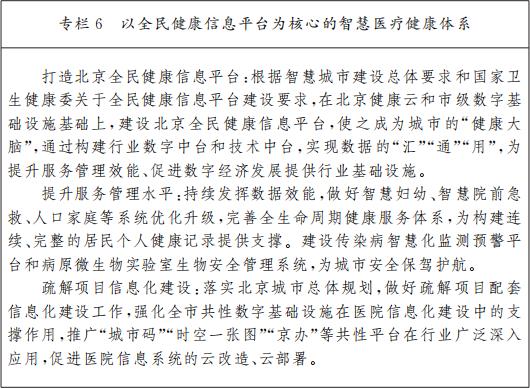
(eleven) to promote the modernization of health governance system and governance capacity.
1. Strengthen organizational leadership
Adhere to the party’s overall leadership over the construction of a healthy Beijing, resolutely use the party’s theory to guide the construction of a healthy Beijing, and ensure that the decision-making arrangements of the CPC Central Committee are fully implemented in the construction of a healthy Beijing. Major decisions, major reforms and planning implementation in the construction of a healthy Beijing will be included in the annual key issues of the party Committee (party group). All districts and departments should incorporate the main planning objectives and indicators into the performance appraisal system, discuss and build a healthy Beijing, and safeguard and improve people’s health.
2. Integrate health into all policies
Comprehensive use of big data and other technical means to explore the establishment of Beijing urban health portrait. Promote the establishment of a health impact assessment system, learn from international experience, gradually establish indicators and procedures for health impact assessment, explore a health assessment system for major policies, major projects and major projects, focus on reviewing whether there are institutional deficiencies and design errors that endanger public health, and strive to minimize the factors that affect public health. Give full play to the positive role of deliberation and coordination bodies, coordinate the development strategy of healthy Beijing, coordinate and integrate resources, and jointly promote the construction of healthy Beijing.
3. Improve the governance pattern of multi-subject participation.
Establish and improve a health supervision and management system that combines institutional autonomy, industry self-discipline, government supervision and social supervision. Strengthen the role of public health committees and other grass-roots governance organizations, and deepen the implementation of planning into the basic units of society. Promote the construction of urban sports associations and give play to the role of "hub" sports social organizations of sports associations. Upgrade and build a standardized, orderly and dynamic national fitness organization network covering urban and rural areas. Strengthen the construction of grass-roots sports organizations, encourage sports associations to extend to towns (streets) and all kinds of sports social organizations to sink into administrative villages (communities). Strengthen the standardization of mass sports events and support sports social organizations to establish national fitness brand events. Increase the government’s efforts to purchase the services of sports social organizations, and guide sports social organizations to participate in the government’s purchase of public services for national fitness. Give play to the role of trade unions, Communist Youth League, women’s federations, disabled persons’ federations and other social organizations, and mobilize the initiative, enthusiasm and creativity of enterprises (institutions), schools and villages (communities). Give full play to the advantages of the capital’s rich intellectual resources, encourage industry societies and associations to give full play to their professional advantages, make suggestions for the construction of a healthy Beijing, gather wisdom and seek common development, advocate the concept that "everyone is the first responsible person for his own health", and guide the masses to actively implement the responsibility of health subjects and practice a healthy lifestyle. Give full play to the role of democratic parties, federations of industry and commerce and personages without party affiliation, and maximize the cohesion of the consensus of the whole society.
4. Improve the health legal system.
Promote scientific legislation in the field of health and further promote administration according to law. Further transform government functions, strengthen macro management, strengthen supervision and public services, and improve scientific, democratic and legal decision-making mechanisms. We will promote the formulation and promulgation of Beijing’s regulations on the prevention and control of infectious diseases and Beijing’s regulations on blood donation, revise Beijing’s regulations on pre-hospital medical emergency services and Beijing’s regulations on population and family planning, promote the legislation and revision of local laws and regulations such as basic medical and health promotion regulations, regulations on the supervision and management of drinking water hygiene, mental health regulations, and measures for implementing maternal and child health care laws, and establish and improve policies and regulations in the field of smart health care. Make scientific and democratic decisions according to law, standardize administrative decision-making procedures, improve major decision-making rules, and strictly implement the necessary procedures for major decisions such as public participation, expert argumentation, risk assessment, legality review and collective discussion and decision. Carry out in-depth education on law popularization. Accelerate the construction of health standards system, take national standards and industry standards as the basis, take local standards as the characteristics, adopt advanced and applicable group standards appropriately, and support and lead the high-quality development of health in the capital. Strengthen the construction of general basic standards and guarantee standards for Chinese medicine services and medical services. Improve the management framework, management system and operation mechanism of local health standards in Beijing. Increase the promotion and use of local standards and promote standardized and standardized management in all fields of health. Carry out the activities of popularizing the sports law, improve the administrative ability of sports departments according to law, strengthen the administrative law enforcement in sports field, improve the level of competition and anti-doping work, and build a "clean gold medal"Anti-doping control system, resolutely achieve "zero tolerance" and "zero emergence" of doping problems. We will deepen the reform of streamline administration, delegate power, strengthen regulation and improve services in the fields of health and sports, fully implement the reform tasks, further optimize the business environment, promote online processing of electronic licenses and administrative matters, and continue to reduce burdens at the grassroots level.
5. Promote broad public participation
Practice the mass line, conduct in-depth investigation and study, and unblock the channels for expressing people’s demands and opinions and suggestions, so that all citizens have the opportunity to participate in the formulation of health-related policies. Consciously accept the supervision of the Municipal People’s Congress and its Standing Committee on the construction of a healthy Beijing, further promote "handling complaints immediately", strengthen active governance and "handling complaints first", properly handle hot issues of social concern in a timely manner, improve the interview mechanism of "handling complaints immediately", and improve the solution rate and satisfaction rate of "handling complaints immediately". Establish and improve the social supervisor system in the field of health, and explore the establishment of the public participation Committee system in public hospitals.
VI. Implementing safeguards
(A) fully reflect the health priority in the development concept.
Give priority to protecting and improving people’s health, highlight health goals in economic and social development planning, highlight the weight of health-related indicators in the evaluation of development performance, and give necessary support in financial investment and fixed assets investment. Adhere to the combination of increasing investment and changing the operating mechanism, and fully consider the characteristics of the medical and health industry in the formulation and implementation of key policies such as incentive mechanism reform. Make overall arrangements for the financial capital requirements for deepening the tasks of medical reform to ensure accurate and efficient financial input. For public health and safety, basic health services, women and children, rehabilitation, health information and other fields, priority should be given to financial security and policy support.
(2) Improve the overall coordination mechanism for planning and implementation.
Establish and improve the planning and implementation coordination mechanism with the participation of all districts and departments, strengthen communication with relevant state departments, make overall consideration of military and land needs, and jointly promote the planning and implementation. All departments and districts should formulate specific plans and action plans for the implementation of planning in their own departments and regions, refine the development goals, main indicators and key tasks put forward in the planning, and organize the implementation in stages and steps to ensure that the responsibilities are put in place.
(3) Strengthen publicity and advocacy
Broaden publicity channels, vigorously publicize the great significance of promoting the construction of a healthy Beijing, improve the awareness rate of planning content and social participation, further unify thoughts and build consensus, give full play to the enthusiasm and initiative of all sectors of society to build a healthy Beijing, and jointly build a healthy city, forming a good social environment and public opinion atmosphere for planning implementation.
(D) Strengthen monitoring and evaluation
Systematically carry out dynamic monitoring, mid-term evaluation and summary evaluation of planning implementation, timely release monitoring results of core indicators and evaluation information of planning implementation effect, improve information transparency, strengthen public and media supervision, and increase residents’ participation in planning implementation evaluation. Third-party independent evaluation should be carried out to improve the objectivity and scientificity of planning implementation evaluation. According to the evaluation results, carry out dynamic maintenance of planning, study and solve the difficulties in planning implementation in time, and ensure the realization of planning objectives.