The revitalization and development of traditional Chinese medicine ushered in a good opportunity
On October 25th, the National Congress of Traditional Chinese Medicine was held in Beijing. Traditional Chinese medicine embodies the Chinese nation’s thousands of years’ health-preserving ideas and practical experience, and has won the recognition of the people for its unique advantages in disease prevention, treatment and rehabilitation. Since the 18th National Congress of the Communist Party of China, breakthroughs have been made in the inheritance and innovation of Chinese medicine, the service level has been continuously improved, the potential of health care has been released, and the overseas influence has been expanding day by day. The revitalization and development of Chinese medicine has ushered in a good opportunity with good weather, geographical location and human harmony.
Promoting the innovative development of traditional Chinese medicine in inheritance
Author: Tao Guoshui (Deputy Director, Institute of Longsha Medical Schools, Wuxi City, Jiangsu Province)
Traditional Chinese medicine is a treasure of the excellent culture of the Chinese nation, which has made indelible contributions to the prosperity and health of the Chinese nation and to the health of the people of the world.
In recent years, China has issued a series of documents, regulations and measures to revitalize and develop Chinese medicine, which provides three-dimensional policy support and financial guarantee for the development of Chinese medicine. In particular, the report of the 19th National Congress of the Communist Party of China proposed to implement the strategy of healthy China, "insist on paying equal attention to both Chinese and western medicine, and inherit and develop the cause of Chinese medicine", which made Chinese medicine practitioners feel very excited.
At the same time, we should also see that the weakening of Chinese medicine thinking, westernization of Chinese medicine evaluation, academic alienation of Chinese medicine, technical degradation of Chinese medicine and weakening of Chinese medicine characteristics and advantages still exist objectively.
In the long history of thousands of years’ development, traditional Chinese medicine has formed many unique academic ideas or opinions, as well as unique clinical diagnosis and treatment skills, academic schools with clear academic inheritance and certain historical influence and recognition. Under the framework of the basic theory of traditional Chinese medicine, these academic schools have built an academic ecology with one source and many streams, a hundred schools of thought contend and a hundred flowers blossom, which is of great value in enriching the academic connotation of traditional Chinese medicine, expanding the means of diagnosis and treatment, improving the clinical efficacy and promoting the cultivation of traditional Chinese medicine talents.
"Healthy China 2030" Planning Outline proposes to carry out the innovation project of TCM inheritance, pay attention to the study and excavation of classic medical books of TCM, comprehensively and systematically inherit various academic theories, schools and theories of past dynasties, constantly carry forward the academic thoughts and clinical diagnosis and treatment experience of contemporary famous TCM experts, tap folk diagnosis and treatment technologies and prescriptions, and promote the inheritance and development of TCM culture.
1, Chinese medicine to put forward new annotations for health problems.
In 2013, state administration of traditional chinese medicine selected 64 academic schools of traditional Chinese medicine all over the country, established heritage studios, and explored, sorted out, inherited and promoted them around the characteristics of the schools. At present, the results are beginning to appear, but there are also some problems.
It should be the historical responsibility of contemporary academic circles in China to construct the discipline system, academic system and discourse system with China characteristics. The author believes that the construction of the "three systems" will ultimately be realized through the construction of the China School. The academic schools of traditional Chinese medicine are often led by leading and prestigious Chinese medicine scientists and their medical groups. Historically, school-level TCM doctors have played an active role in the discovery of many major medical problems, the proposal and improvement of scientific theoretical system, the development of new fields and directions of TCM, the construction of new viewpoints and theories, and the improvement of theoretical and clinical standards.
Traditional Chinese medicine practitioners should dig deep into the identifying elements in the academic schools of traditional Chinese medicine, refine the deep-seated connotation in the culture and skills of traditional Chinese medicine, give full play to the leading role of the academic schools of traditional Chinese medicine, actively integrate into the construction of China School, and resonate with China School.
Huangdi Neijing holds that "heaven and earth are combined with qi, and all things are transformed into life in six sections" and that "man is born with the qi of heaven and earth, and the method of four seasons is achieved". Therefore, in clinical practice, it is emphasized that "the year should be established first, and the qi should be made clear, and the number of fire and water in Jin Mu will run, and the wind and fire in cold and summer will turn into imperial fire, so that the heaven can be seen, the people’s qi can be adjusted, and the yin and yang can be relaxed, which is near without confusion" and ".
The theory of five movements and six qi is based on the idea of "the isomorphism between man and nature", and through the principle of "being old first, not cutting the sky", harmonizing yin and yang and dynamically balancing, the purpose of "harmony between man and nature" is achieved. Traditional Chinese medicine (TCM) is a combination of Taoism and Taoism, which follows the characteristics of Chinese civilization, such as "the unity of heaven and man" and "the nature of Taoism", and contains such avenues as holistic view, dialectical view, "knowing from the micro, extrapolating from the outside" and "the wise man observes the same, while the fool observes the different". However, the understanding of the value of academic schools of traditional Chinese medicine in the field of traditional Chinese medicine mostly stays at the level of "technique". Strengthening the study of academic schools of traditional Chinese medicine is helpful to put forward new annotations for major health problems, especially basic theoretical problems. Therefore, when studying, we must aim high, base ourselves on the genre, and jump out of the genre.
2, help the prevention and treatment of major infectious diseases and chronic disease management.
Huang Luqi, an academician of the China Academy of Engineering and president of the Chinese Academy of Traditional Chinese Medicine, once pointed out that "the theory of five movements and six qi in traditional Chinese medicine is to use the basic principles of five movements and six qi to explain the annual time law of climate change and its influence on human diseases, which is the essence of traditional Chinese medicine, so as to predict the occurrence and nature of diseases in the future." In the past, the unique value of luck theory has been demonstrated in the prevention and treatment of infectious diseases such as Japanese encephalitis, SARS, hand-foot-mouth disease and avian influenza.
Recently, a prospective study on chronic diseases in China has followed up nearly 500,000 people for 7 years. The results show that people born in summer have a lower risk of developing type 2 diabetes, while those born in other seasons have a 9% increased risk of developing diabetes. The discovery of seasonal birth and the incidence of diabetes mellitus has made a good interpretation of the theory of correspondence between man and nature.
In addition, the research team of Wuxi Longsha Medical School used the theory of five movements and six qi combined with modern meteorological factors to analyze the retrospective study of the correlation between 63,700 patients with coronary heart disease and birth date in Wuxi. The susceptibility to coronary heart disease in different birth years was obviously different, and it was statistically significant. Although it is only a regional study, we can see the dawn and hope of traditional Chinese medicine in the prevention and control of chronic diseases. In the future, multi-center, large sample and cross-regional joint research may open another door for cardiovascular disease prevention and treatment.
The strategy of healthy China reflects the change of medical model from disease-centered to health-centered. It is an urgent problem for Chinese medicine practitioners to give full play to the corresponding advantages of preventing diseases between man and nature in great health.
The medical treatise of Ming Dynasty in China, The General Outline of Syndrome Differentiation and Treatment, said, "The best way to seek is to treat it before it gets sick." At present, various "prevention centers" and "Chinese medicine health management centers" in hospitals must not be reduced to simple physical examination centers, but should have a set of three-dimensional detection, intervention, evaluation and correction mechanisms based on the theory of "harmony between man and nature", and fully demonstrate the advantages and characteristics of Chinese medicine in major emerging infectious diseases, hypertension, diabetes and other chronic diseases.
The "Healthy China 2030" Planning Outline proposes to comprehensively and systematically inherit various academic theories, schools and theories of past dynasties. We should fully explore and sort out the unique advantages of different academic schools, realize the creative transformation and innovative development of traditional Chinese medicine, help the prevention and treatment of major infectious diseases and the management of chronic diseases, and give full play to the new actions of traditional Chinese medicine under the background of the times.
3. Realize development through mutual flow and blending.
There should be a sense of historical responsibility in the construction of academic schools of traditional Chinese medicine. We should persist in learning from the past, develop the ancient meaning, integrate new knowledge, and strive to "innovate" on the basis of "keeping the right". We should be good at "enlightening my wisdom from the skill of former people", pay attention to carrying forward the spirit of openness, tolerance, innovation and cooperation, and cultivate more school-level Chinese medicine practitioners.
Chinese medicine belongs to China and the world, but its core is China’s. Therefore, Chinese medicine must communicate with international academic circles with academic discourse with China characteristics. The research of academic schools of TCM should stick to the academic core first, and the core and soul of the school are academic, which must not be generalized.
Academic schools are divided into regional schools. It is true that regional factors play an important role in the formation of academic schools of traditional Chinese medicine. From the "small differences, big differences" in Huangdi Neijing, to the medical contention in Jin and Yuan Dynasties in history, and the "cold and warm" dispute since Ming and Qing Dynasties, the academic schools of traditional Chinese medicine originated from the region and finally broke through the region. The author believes that the study of academic schools of traditional Chinese medicine should break through the solidification of regions, especially administrative divisions. Now some places have started to "create" schools according to administrative naming, so we should be vigilant. The academic school of traditional Chinese medicine is not a "sect", so it is not possible to set up separate schools for personal opinions.
The study of academic schools of traditional Chinese medicine should not only pay attention to its own in-depth research, but also pay attention to horizontal comparative research, so as to seek similarities and differences and find characteristics; Seek common ground in differences and seek laws. In the study of academic schools of traditional Chinese medicine, Mr. Fei Xiaotong summed up the principle of "each has its own beauty, each has its own beauty, and the United States and the United States share the same beauty", which is worth learning.
A single flower does not make a spring. Academic schools of traditional Chinese medicine should pay attention to mobility and academic exchanges, and should not be closed-door and narcissistic. We should pay attention to the region instead of sticking to it, not only inherit the genre, but also abandon the portal view and develop in mutual flow, cooperation and blending.
For example, Shanghai, Jiangsu, Zhejiang and Anhui provinces and cities involved in the Yangtze River Delta region have Shanghai-style medicine in history, Menghe, Longsha and Wumen medical schools in Jiangsu, Zhejiang-style Chinese medicine in Zhejiang and Xin ‘an medical school in Anhui. These medical schools have a lot of blending in history. For example, Ye Tianshi, a famous physician in the Qing Dynasty, founded the theory of febrile diseases and invented the treatment of miscellaneous diseases, which is well-known in the medical forest. His ancestral home was Huizhou, and then he moved to Suzhou. He not only inherited Xin ‘an family studies, but also worshipped famous teachers and absorbed Han Yong, a doctor from Wuzhong. His medical records were collected and published by Hua Xiuyun, a doctor from Wuxi Longsha. Therefore, Ye Tianshi is both Xin ‘an and Wumen’s.
The formation of academic schools of traditional Chinese medicine is also a microcosm of the prosperity of local culture to some extent, and the study of academic schools highlights the basic value and soft power of culture. Chinese medicine practitioners in the Yangtze River Delta region should seize the opportunity that the development of regional integration in the Yangtze River Delta has become a national strategy, build a "Yangtze River Delta regional integration academic school alliance of Chinese medicine", give full play to the advantages of Chinese medicine characteristics, and let the characteristics of Chinese medicine shine in the revitalization and blending of schools.
As long as Chinese medicine practitioners find the right position and work hard, they will have great potential in the construction of a healthy China, and they will certainly show the China wisdom of Chinese medicine in the construction of China School.
Integration of traditional Chinese and western medicine promotes the modernization of traditional Chinese medicine
Author: Chen Xiangmei (Academician of China Academy of Engineering)
Chinese medicine is an important contribution of Chinese civilization to world civilization. In the past few decades, by using the new theories, new thinking and new methods of integrated traditional Chinese and western medicine, we have made some achievements in the prevention and treatment of major and difficult diseases, common diseases and frequently-occurring diseases, as well as the excavation of traditional Chinese medicine, which has improved the clinical efficacy, produced the Nobel Prize-winning medical scientific and technological achievements such as artemisinin, and highlighted the advantages of integrated traditional Chinese and western medicine.
At present, we should take inheritance as the foundation and innovation as the driving force, and give full play to the leading role of traditional Chinese medicine in the prevention of diseases, the synergistic role in the treatment of major diseases and the core role in disease rehabilitation; Stimulate and release the potential and vitality of traditional Chinese medicine, and promote the modernization and internationalization of traditional Chinese medicine under the background of modern medical development. It should be noted that in the current medical and scientific research practice, there are still some problems such as insufficient research on the effective components and safety of traditional Chinese medicine, lack of high-level clinical research, unclear scope of diagnosis and treatment of traditional Chinese and western medicine, and irregular development of traditional Chinese medicine market.
The author suggests:
First, strengthen the basic and clinical research on the effective components and safety of traditional Chinese medicine, and promote the modernization of traditional Chinese medicine.
Traditional Chinese medicine is a treasure house and an important contribution of Chinese civilization to world civilization, which has greatly promoted people’s life and health and disease prevention and health care. In order to make Chinese medicine make greater contribution in the field of life and health, and go further to the world, we need to strive to make more landmark achievements in the field of Chinese medicine and vigorously promote the modernization process of Chinese medicine. Specifically, it is necessary to conduct more high-level multi-center and prospective clinical research of traditional Chinese medicine and basic medical research at the cellular and molecular levels, further clarify the therapeutic effect, mechanism and safety of traditional Chinese medicine, combine the development strategy of major national drug creation, deeply explore the essence of traditional Chinese medicine, and make more major breakthroughs such as artemisinin in treating malaria and arsenic trioxide in treating leukemia, so as to better serve the construction of healthy China and promote the development of Chinese medicine to the world.
Second, introduce modern medical management system into the practice of TCM diagnosis and treatment, and build a national major disease prevention and control system combining traditional Chinese and western medicine.
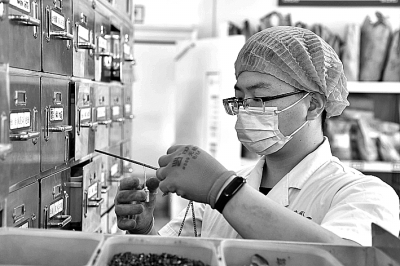
The staff is preparing Chinese medicine. Xinhua news agency
With the development of economy and society, the spectrum of diseases in China has also changed. Chronic non-communicable diseases, such as cardiovascular and cerebrovascular diseases, tumors and metabolic diseases, have become important public health problems that seriously endanger people’s health. Traditional Chinese medicine has unique advantages in the treatment of these diseases. Therefore, it is of great significance to promote the integration of Chinese and Western medicine resources, complement each other’s advantages, and coordinate innovation, and accelerate the construction of a national major disease prevention and control system combining Chinese and Western medicine. In the practice of clinical diagnosis and treatment, the scope of diagnosis and treatment of traditional Chinese and western medicine and traditional Chinese medicine should be further clarified; When formulating the new law on medical practitioners, we should consider adding relevant provisions to regulate the diagnosis and treatment of traditional Chinese medicine; We should establish the cooperation mechanism of Chinese and western medicine step by step, formulate the prevention and control plan of integrated Chinese and western medicine, accelerate the construction of the national major disease prevention and control system of integrated Chinese and western medicine, and improve the comprehensive prevention and control level of major diseases in China; Medical personnel engaged in the diagnosis and treatment of traditional Chinese medicine and western medicine are allowed to cross each other under certain circumstances, and the access conditions and training and assessment rules for the conversion of Chinese and western medicine practice categories are clarified, so that Chinese and western medicine practitioners can flow reasonably within a certain range and promote the coordination and complementarity between Chinese and western medicine.
Third, strengthen the construction of talent team of integrated traditional Chinese and western medicine.
The talent training level of integrated traditional Chinese and western medicine is an important guarantee for the success of integrated traditional Chinese and western medicine, and an important way to inherit and develop Chinese medicine and realize the modernization of Chinese medicine. It is suggested to increase the support for the combination of traditional Chinese and western medicine, relax the practice scope of practicing doctors of the combination of traditional Chinese and western medicine, open up the promotion channel of professional titles of talents of the combination of traditional Chinese and western medicine, and improve the evaluation system of professional and technical titles of the combination of traditional Chinese and western medicine. Give appropriate tilt to the policy to attract outstanding talents of Chinese medicine and western medicine to join the team of integrated Chinese and western medicine. Establish and improve the post-graduation education system such as standardized training for residents of integrated traditional Chinese and western medicine, and formulate training plans for integrated traditional Chinese and western medicine talents at different levels to promote the sustainable development of integrated traditional Chinese and western medicine talents. Boldly explore a variety of training modes of integrated Chinese and Western medicine talents, such as "learning from the West" and "learning from the West", especially to increase the training scale of "Western medicine learning Chinese medicine" and attract more Western medicine to join the cause of integrated Chinese and Western medicine. Taking the construction of key disciplines/specialized colleges as an opportunity, we should internalize the motivation of professional talents’ development, strengthen the depth of professional talents’ training of integrated traditional Chinese and western medicine, and build a highly sophisticated professional team.
Traditional Chinese medicine cultural relics need urgent rescue and protection.
Author: Zhang Qicheng (Dean of National College of Beijing University of Chinese Medicine)
Since the founding of New China, Chinese medicine has made remarkable progress. However, a large number of materials and objects related to traditional Chinese medicine are gradually disappearing due to the destruction and scattered existence of the people during the Cultural Revolution. Our country has collected the achievements of medical and health undertakings and objects twice, but unfortunately, many of them have collected a lot of historical materials and objects about traditional Chinese medicine, but they are lost because of the lack of national museums of traditional Chinese medicine.
According to incomplete statistics, there are more than 1 million pieces of traditional Chinese medicine cultural relics in China. There are dozens of museums in colleges and universities of traditional Chinese medicine, scientific research institutions and the private sector, with less than 1/10 of the cultural relics. Most of these museums are small in scale, with insufficient cultural relics preservation conditions, lack of professional talents, and backward management concepts and means. Therefore, it is urgent to establish the National Museum of Traditional Chinese Medicine to better rescue and protect the precious heritage of traditional Chinese medicine.
The establishment of "National Museum of Traditional Chinese Medicine" is a major project to inherit and develop China’s excellent traditional culture and show the glorious history and great achievements of traditional Chinese medicine. It is not only a grand event that Chinese medicine practitioners hope for, but also a major event in the development of traditional Chinese medicine industry, and it is also a major measure to enhance the country’s cultural soft power and implement the national strategy of "healthy China".
At present, China’s traditional Chinese medicine industry and economic and social development have entered a new stage, and all the conditions for building a national museum of traditional Chinese medicine have been met. The author suggests that the project planning and investment demonstration of the National Museum of Traditional Chinese Medicine should be started as soon as possible.
How to build the National Museum of Traditional Chinese Medicine? First of all, top-level design and reasonable planning should be done well. It should embody the design concept of combining medicine with culture, combining tradition with modernity, combining domestic with international, and combining static with dynamic.
Secondly, in the design of the museum, we should fully consider the medical and cultural functions of traditional Chinese medicine, not only show the material and cultural achievements of traditional Chinese medicine, but also show the intangible cultural heritage of traditional Chinese medicine, pay attention to the vitality and interaction of traditional Chinese medicine, and build the National Museum of Traditional Chinese Medicine into a base for the inheritance and learning of Chinese excellent traditional culture. At the same time, we should also consider that the National Museum of Traditional Chinese Medicine is an important place for the country’s foreign exchange, and its design should be conducive to the spread and recognition of Chinese excellent traditional culture in the world.
Finally, the location and construction of museums are also very important. In my opinion, we can choose places where museum resources are concentrated, and build the main museum and the auxiliary museum at the same time to form a museum group, which will easily attract more people to visit. The main museum displays the whole historical and cultural panorama of traditional Chinese medicine (including ethnic medicine), focusing on participation, interaction and future prospect; The sub-museum takes "Tai Hospital" as the main body, focusing on displaying court medicine and Yanjing medicine.
Extended reading
Since the founding of New China, China’s traditional Chinese medicine has made remarkable achievements and made important contributions to improving people’s health.
In order to enable more and more people to enjoy Chinese medicine at their doorstep, China has introduced measures such as improving the service capacity of Chinese medicine at the grassroots level to "strengthen the muscles and bones" at the grassroots level. According to the data of state administration of traditional chinese medicine, by the end of 2018, 98.5% of community health service centers and 97.0% of township hospitals in China have been able to provide Chinese medicine services.
Traditional Chinese medicine not only meets the health needs of the grassroots, but also plays a role in the world. At present, Chinese medicine has spread to 183 countries and regions. Traditional Chinese medicine has gradually entered the international medical system, and has been registered in Russia, Cuba, Vietnam, Singapore and the United Arab Emirates in the form of drugs. According to the statistics of the World Health Organization, there are currently 103 Member States that have approved the use of acupuncture, of which 29 have established laws and regulations on traditional medicine, and 18 have included acupuncture in the medical insurance system.
Guangming Daily (October 27, 2019, 06 edition)