The United States will not give up hegemonism and unilateralism, and no number of "special conferences" can save US-Russian relations.
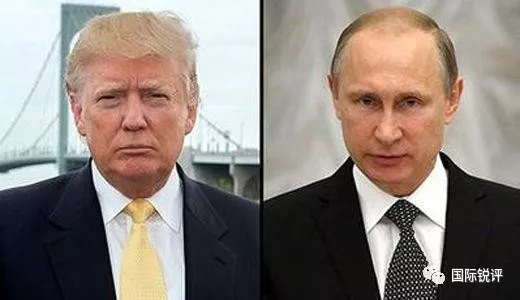
US President Trump and Russian President Vladimir Putin held their first official meeting in Helsinki on the 16th. After several hours of closed-door meeting at the Finnish Presidential Palace, the two sides said that the first formal meeting between them was "constructive".
After all, it is not in the interests of either the United States or Russia to continue to make bad friends.
Just two days before the meeting, the US investigation on "TongRumen" suddenly exploded, and the US Department of Justice announced that it would sue 12 Russian intelligence personnel, accusing them of invading the Democratic Party’s computer system on the eve of the 2016 US presidential election. Many American officials also took the opportunity to strongly oppose Trump’s meeting with Putin. Even so, Trump stepped on the land of Finland under pressure. Behind Trump’s persistent enthusiasm for meeting with Putin, there are multiple considerations: one is to build momentum for the mid-term elections in November this year, and the other is to use Putin’s hand to put pressure on NATO countries in order to increase the bargaining chip of the United States on military spending and other issues.
For Putin, meeting with Trump, regardless of the outcome, will be an important step in Russian diplomacy this year. Against the background that the relationship between Ukraine and the West has fallen to freezing point, the first meeting between Russia and the US dollar itself is an attempt to break the deadlock. In May this year, Putin, who was re-elected as Russian president, promised to ensure that Russia ranks among the top five economies in the world by 2024. Whether or not to improve relations with the West and ease the restrictions of sanctions on Russia’s economic development will directly affect whether Putin can fulfill his promise. Therefore, Putin has every reason to attach great importance to this meeting and is full of expectations.
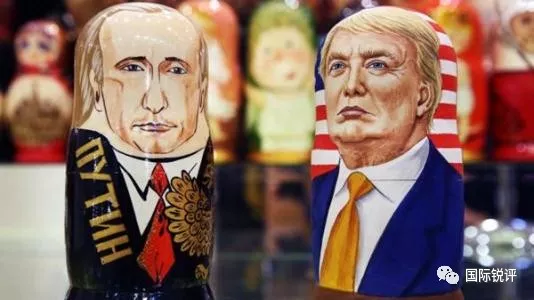
The willingness of the two sides to meet is so consistent, then, can a "special meeting" really save the US-Russia relationship that has fallen to freezing point?
Judging from the statements made by reporters after the meeting between the two sides, the contents of the "Special Meeting" covered "TongRumen", the nuclear issue on the Korean Peninsula, counter-terrorism, nuclear arms control, trade and investment cooperation, and the situation in Iran and Syria. It can be said that apart from Crimea, a difficult problem that is almost "unsolvable" in US-Russia relations, other key issues in bilateral relations are involved.
In fact, the relationship between Russia and the United States is complicated, and many contradictions can be roughly divided into two categories, one is conflict of interests, and the other is conflict of values. The former can be solved through negotiation and compromise, while the latter is difficult to reconcile in a short time.
As far as the Syrian issue is concerned, there is a direct conflict between the positions and interests of the United States and Russia, but it is still expected that the two sides will coordinate their positions through meetings and even reduce their differences through mutual compromise. Especially in the current situation of the increasingly stable Bashar regime, it is not excluded that Trump recognizes the legitimacy of the Bashar regime and no longer tries to overthrow its rule in exchange for Russia’s push for Iran to reduce its military presence in Syria.
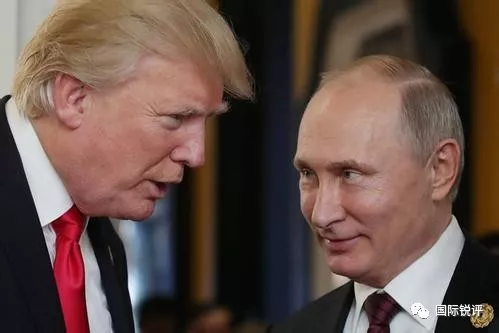
The differences between the United States and Russia on the Ukrainian issue are more like conflicts of historical values. In Russia’s view, its recovery of Crimea is not only the will of the people, but also the "last line of defense" to defend its own interests; In the eyes of the United States, Russia’s actions against Crimea are "acts of aggression" and pose a serious threat to the security of Europe as a whole. On this issue, neither side can see any signs of concession.
In fact, mutual distrust between the United States and Russia dominates the relations between the two countries. This distrust originated during the cold war, but it did not disappear because of the end of the cold war. Since the end of the Cold War, it has been the consistent policy of successive American governments to squeeze Russia’s strategic living space. In particular, as the United States treacherously expanded NATO’s borders to the east again and again, Putin’s attitude towards the United States and NATO has gradually changed. From his efforts to "become a full member" in the G-8 and his openness to cooperation with NATO, today’s relations with the West are gradually drifting away. It is not difficult to imagine what kind of mental journey Putin has gone through.
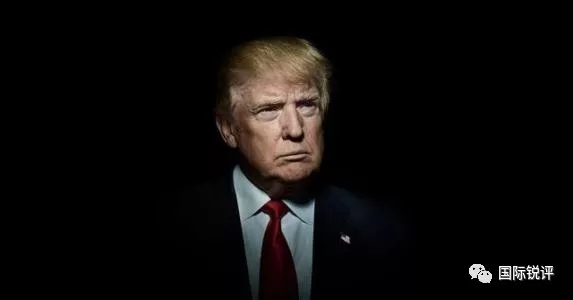
In terms of international order, Russia advocates the development of multipolarization in the world, while the United States is unwilling to give up its world hegemony; In the economic field, Russia advocates free trade and multilateralism, while today’s United States does not hesitate to provoke trade conflicts at the cost of "hurting one thousand enemies and losing eight hundred", and goes further and further on the road of trade protectionism and unilateralism … …
At present, if the US-Russia relationship wants to pick up, it must not only cross the hot and difficult issues such as Ukraine, Syria and Iran, but also face the complicated political ecology of the US domestic relations with Russia. If the United States does not give up its consistent position of hegemonism and unilateralism, I am afraid that it will be difficult for many "special clubs" to save the US-Russia relations that have fallen to the freezing point.