Today’s Film Review | Is there a threshold for Oppenheimer? It is enough to read this article.
Special feature of 1905 film network On August 30th, the director’s new film was released in mainland China, which is Nolan’s first biopic.


Oppenheimer’s box office exceeded 100 million in three days, and by 17:00 on September 5th, Oppenheimer had included 246 million box office.
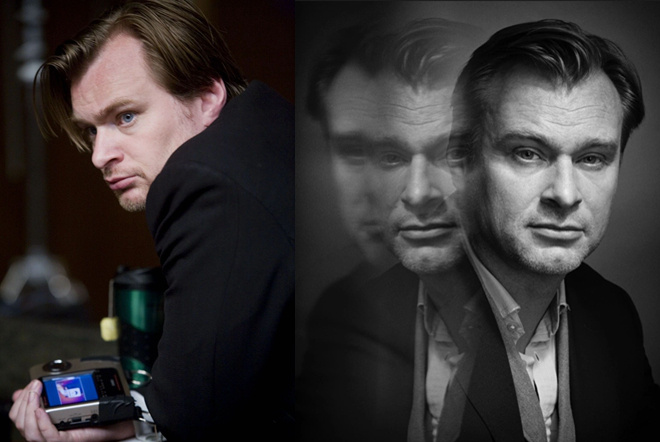
As the director of films with great international influence, Nolan returned to the screen with his new work Oppenheimer, and had already gained infinite expectations before the screening. After the release, Oppenheimer lived up to expectations, and his reputation rose all the way. The score of Douban rose from 8.6 to 8.9.
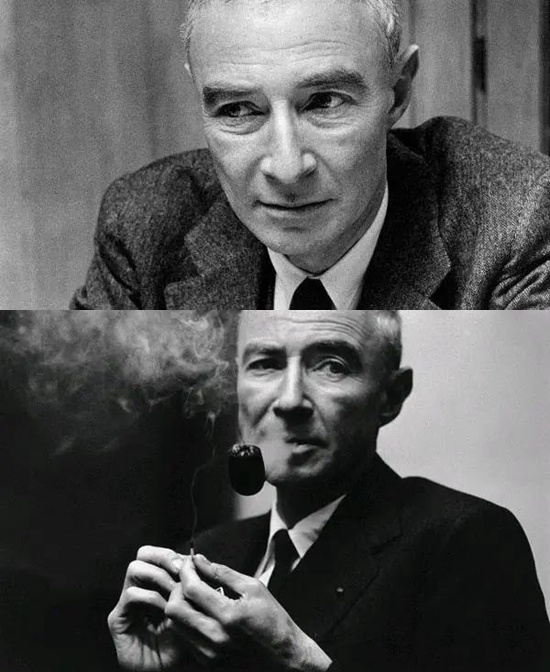
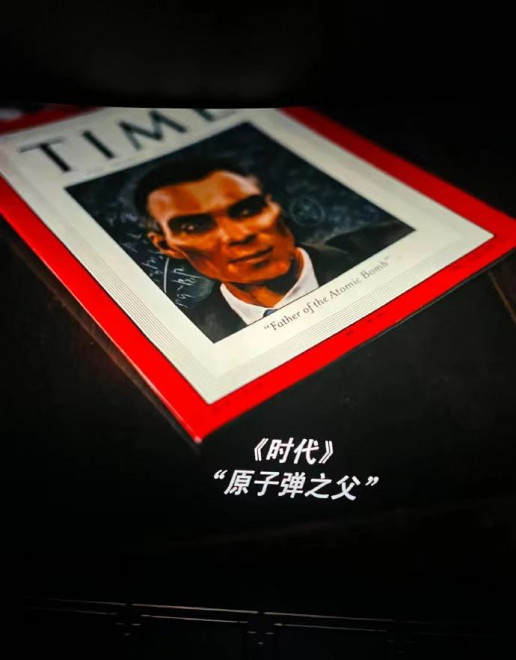
Oppenheimer, theoretical physicist, head of Manhattan project research, is known as the "father of atomic bomb".
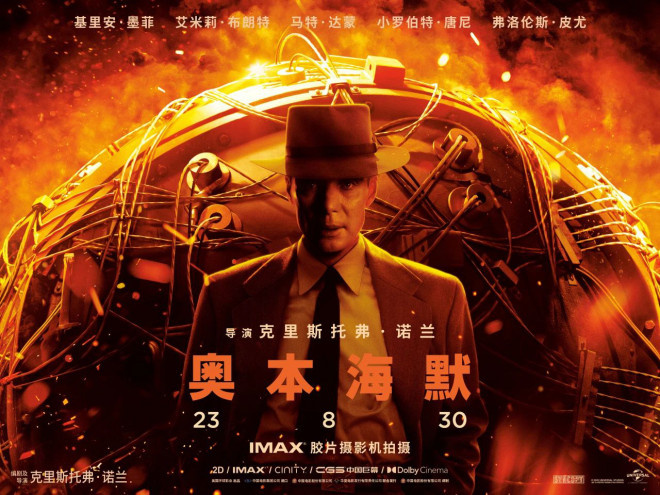
In the three-hour story in Oppenheimer, Nolan told us about Oppenheimer’s development of the atomic bomb during World War II, and also brought the unfair hearing that Oppenheimer faced to the screen after changing the course of human history.

In the story that the audience is so familiar with, how does Nolan, a director who is famous for his "real shooting", show the abstract landscape of the physical world with a film IMAX camera, and what kind of film art does he use to show the life of legendary physicist Oppenheimer?
Physics and art
Seek the balance between accuracy and freedom
If art creates romance in freedom, physics seeks romance in an accurate framework. Such a pair of seemingly contradictory words merged into Oppenheimer in Nolan’s lens.
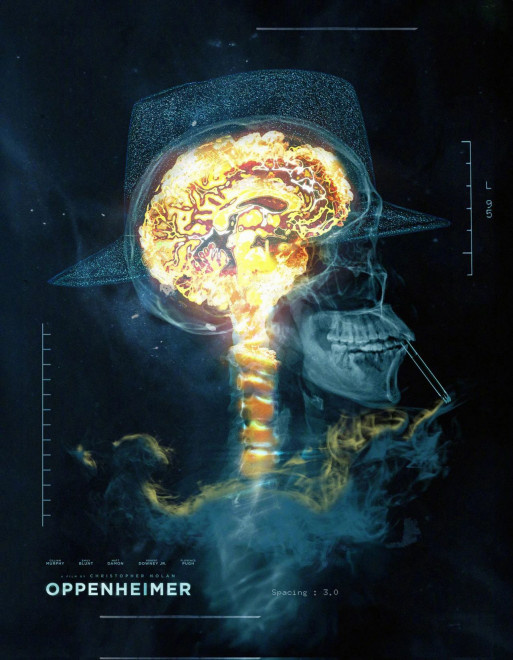
Nolan’s films are always connected with science, such as Interstellar’s transmutation reference to Einstein’s twin paradox in special relativity and the accurate construction of multidimensional space in Inception.
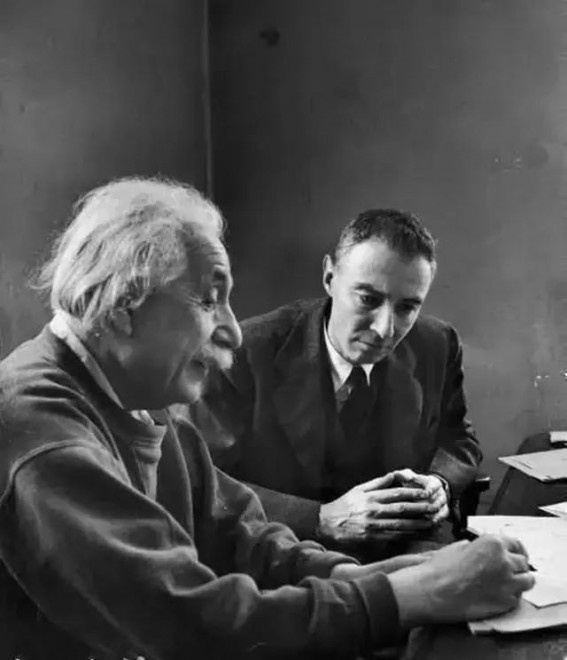
However, as a biographical film recording the life of a physicist, seeking the balance between accuracy and artistry has become a very difficult but extremely important key point in Oppenheimer’s creation.
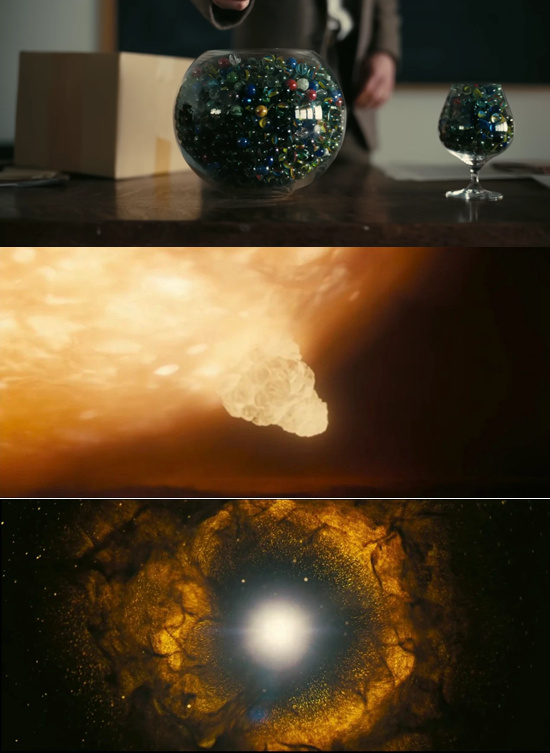
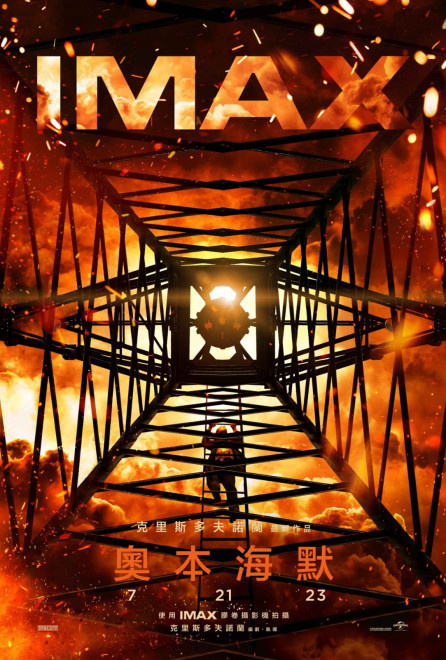
In order to better create a real era for the audience, Nolan and his art production team spent several years carefully studying the historical archives of that year, watching documentaries and scrutinizing all the details. And in order to achieve the picture effect of "real shooting" of the atomic bomb explosion, Nolan and the team conducted many experiments, simulated the real explosion scene through different kinds of explosives combinations, and combined the film with the real world texture through superb photography technology to create the "atomic bomb explosion" scene with Nolan’s characteristics.
But the figuration of art can’t fully show the abstraction of physics. Although Nolan and his team have highly restored the physical beauty in the micro-world, they are still different from the accurate real world in scenes such as releasing shock waves after nuclear explosions.
In this discrepancy, Nolan thinks that he is always exploring how to describe it in the language of movies on the big screen, and how to influence the way people receive information, and rebuild the movie world seen by the audience. Accuracy is truth, while freedom is mixed with magic, and drama always dances on the balance between truth and magic.
Subjectivity and objectivity
Defining the boundary between scientific research and morality
Due to the limited duration, the film selected the most dramatic experience of Oppenheimer’s life for interpretation, and the audience followed the star scientist’s perspective to the peak of achievement, and then fell to the altar.

The original biography of Oppenheimer reveals a living person for us. He was once put on the altar, but his body is still mortal. "He is ambitious and insecure, he is brilliant and naive, he is decisive and fearful, he is tenacious and indifferent and full of confusion." He is a great man and an ordinary man. You will see an Oppenheimer who is full of ambition and selfish desires and whose conscience is tortured and pulled.
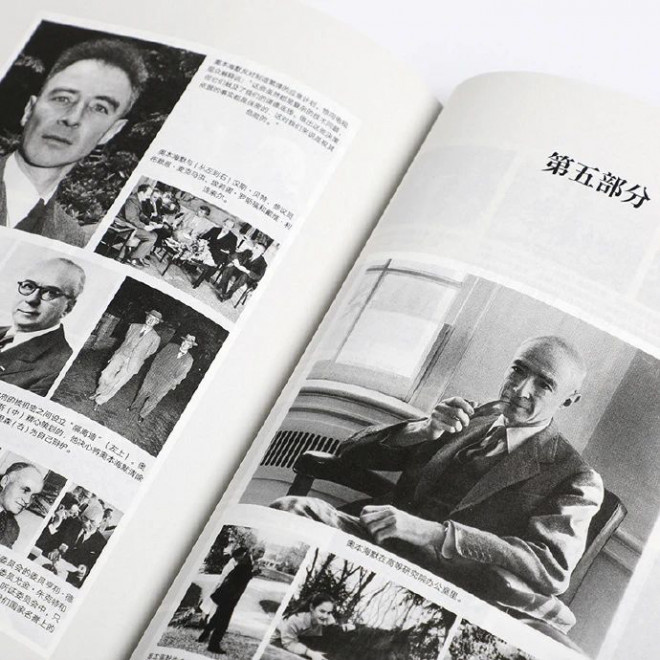
Like the novel, the film does not blindly deify the great man, but unfolds the ups and downs of Mr. Oppenheimer’s life for us through an objective and rational perspective. He is strong, persistent and forbearing. Although he has retreated, he is even a little timid, but this is the real Oppenheimer.
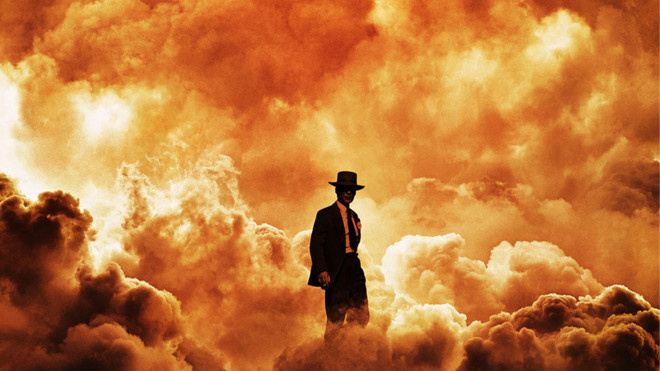
In Christopher Nolan’s mind, the stage of script creation is the most difficult. Nolan said: "Because I am not making a documentary, but making a dramatic interpretation of a story." Nolan wrote the script in the first person for the first time, which facilitated the audience to enter Oppenheimer’s heart and faced an irreconcilable moral dilemma with him.
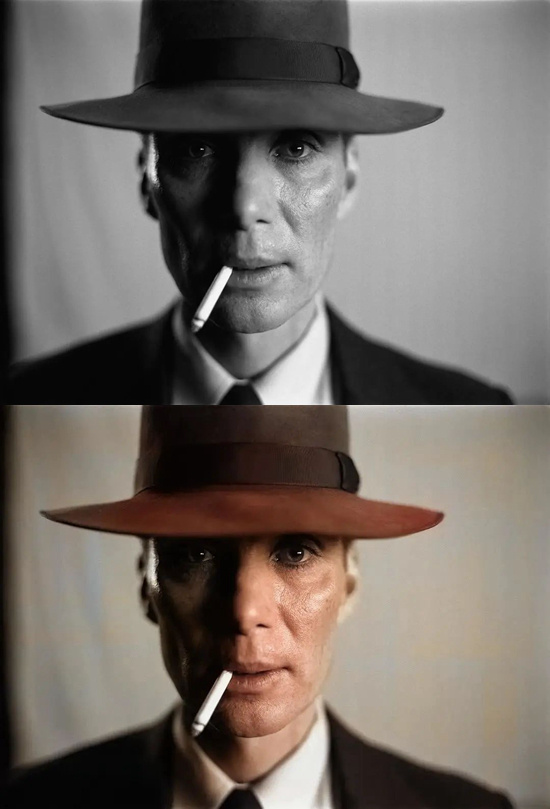
The most intuitive is the conversion between black and white and color pictures, as well as the nonlinear narrative structure. Nolan not only shows the characters’ determination, charm and willpower in a large number of scenes and bridges, but also does not shy away from the characters’ personality defects, desires and inner struggles. This should be the result of the unification between Nolan’s observation of real life history and film types, programs, narrative formulas and fictional techniques.
Take the contrast between black and white and color, black and white is the objective statement of Oppenheimer from the perspective of others, while the color picture is Oppenheimer’s inner self-analysis.
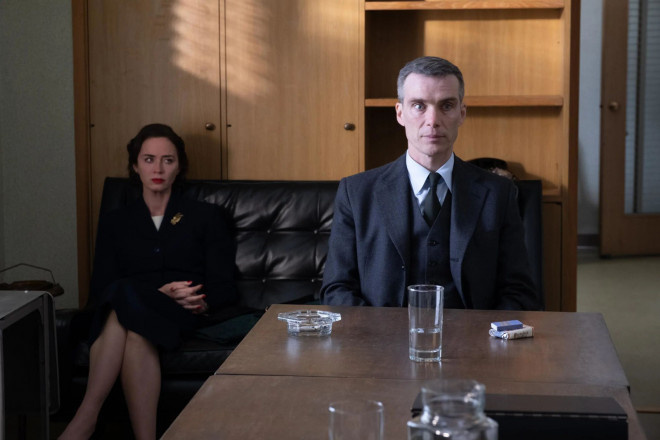
The film began with an internal hearing about Oppenheimer in 1954, that is, the American Atomic Energy Association decided whether Oppenheimer still had the "safety qualification" to continue to participate in nuclear work, which can be simply understood as "political review". The background of this conference is that the United States launched a persecutive "political investigation" on a large number of key personnel in the 1950s due to the cold war with the Soviet Union and under the influence of domestic McCarthyism, which resulted in many unfair results.
This part is colorful in the film, and there is a subtitle called "Fission", which is the basic principle of making atomic bombs. It implies that Oppenheimer’s life achievements and his life experiences, like nuclear fission, are a chain reaction of constant collision until nuclear explosion.
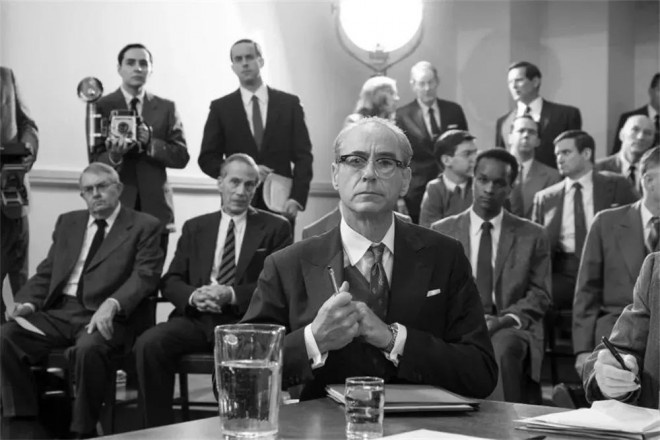
After that, the film soon showed another scene in black and white, with the subtitle "Fusion". Nuclear fusion is the basic principle of making hydrogen bombs. The U.S. successfully tested the hydrogen bomb in the early 1950s, which further aggravated the armament upgrade in the Cold War era, and also showed that Oppenheimer’s position in nuclear science and technology research began to become dispensable. Oppenheimer’s depression in the second half of his life after the hearing was basically the result of the change of scientific research goals after the political line dominated.
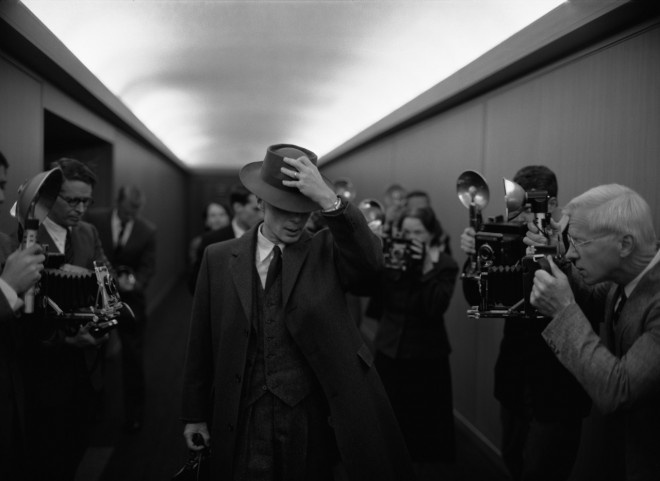
The protagonist of the black-and-white scene is Lewis Strauss, president of the American Atomic Energy Association. Simply put, he can be regarded as the villain in the story. When Oppenheimer’s popularity was in full swing, the "father of atomic bomb" was excluded from the follow-up study of atomic energy because of the harm of villains.
From the perspective of black-and-white pictures, Lewis Strauss’s comments on Oppenheimer’s career also represent a "more objective narrative position". If the story of "fission" belongs to the growth of Oppenheimer, Prometheus who stole fire, then the story of "fusion" represents a more complicated evaluation for later generations. After all, it is hard to say that Oppenheimer has no moral responsibility for eventually promoting the birth of weapons of mass destruction. We should know that big men like Einstein and Bohr deliberately stayed away from the research process of the atomic bomb. It can be said that Oppenheimer, as the leader of the atomic bomb, had complex motives for longing for glory in addition to the patriotic factors of dying in World War II.
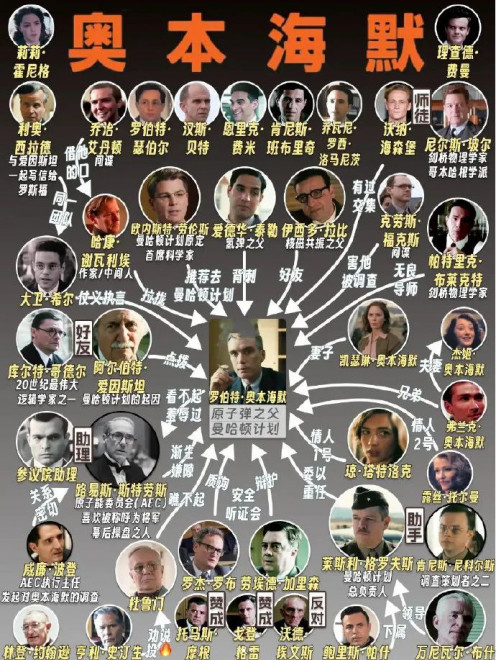
Nolan tries to balance the image of "hero" through the narrative clue of Lewis Strauss and present more controversial characters in the biographical film. The interweaving of subjective and objective clues constitutes the overall development of the film.
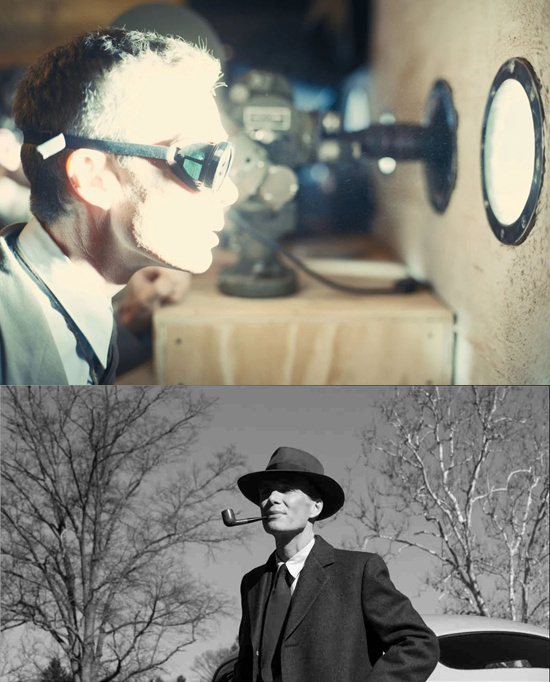
Compared with movies, real life is not black and white, and it is a more real normal life that characters grope and advance in the gray area.
History and future
Looking for the end of creation and destruction
When Oppenheimer read the Bhagavad-gita in Sanskrit to his new girlfriend:
"Now I am dead and the destroyer of all the worlds."
What’s he thinking?

A large number of complex background texts are intertwined in the film, which contains many contents of history, physics, sociology and psychoanalysis. If you can learn more knowledge points, you can understand many things that Nolan wants to express. Otherwise, the film will only become a so-called idle chat between characters, and become boring.
In the original biography of Oppenheimer, the author describes Oppenheimer’s inner anxiety after the Hiroshima and Nagasaki events through a lot of profiles, and he seems to realize that he has opened Pandora’s box to some extent. Only three days after the American victory, Oppenheimer told the president that the United States had no defense against these new weapons.
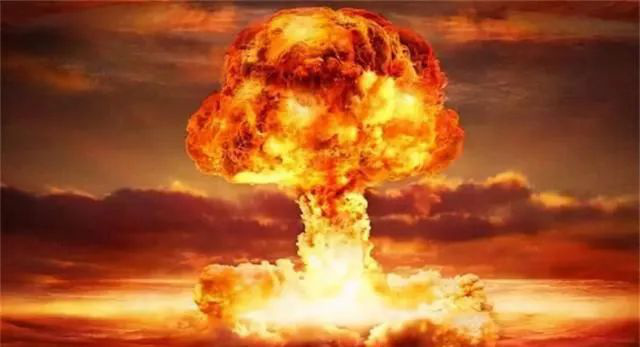
Looking back at the original intention of developing the atomic bomb, a group of scientists worked day and night in Los Alamos, racing against the Nazis, in order to develop the atomic bomb before fascism. At that time, they had the great ambition of saving the world. Once Oppenheimer was "like Prometheus, the rebellious Greek god — — He stole fire from Zeus and gave it to mankind. "
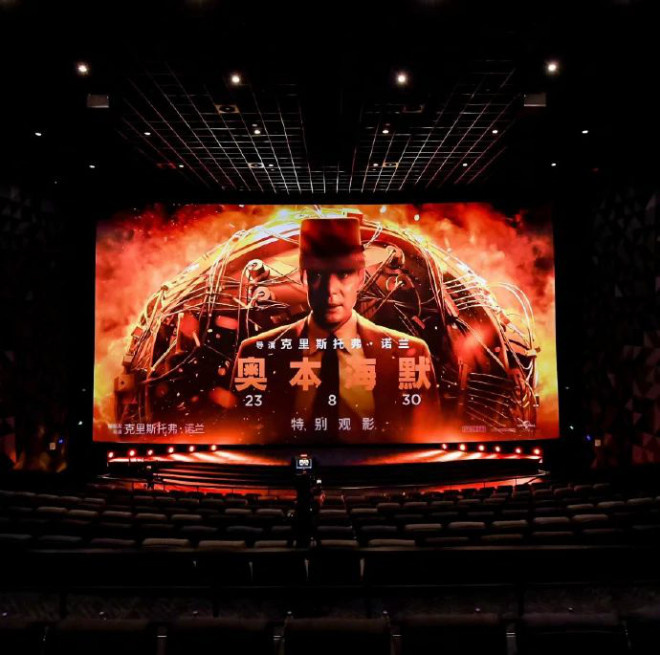
But when the atomic bomb exploded, Oppenheimer and other scientists realized that the world was not what it used to be. He remembered the verse in the Bhagavad gita: "Now I am a god of death, the destroyer of all worlds." Later, when he saw that the new world he had created was out of control in rolling in the deep and tried to contain it, "those in power rose angrily like Zeus and gave him a hard hand." The "security hearing" that changed the rest of his life was the strangulation ceremony.
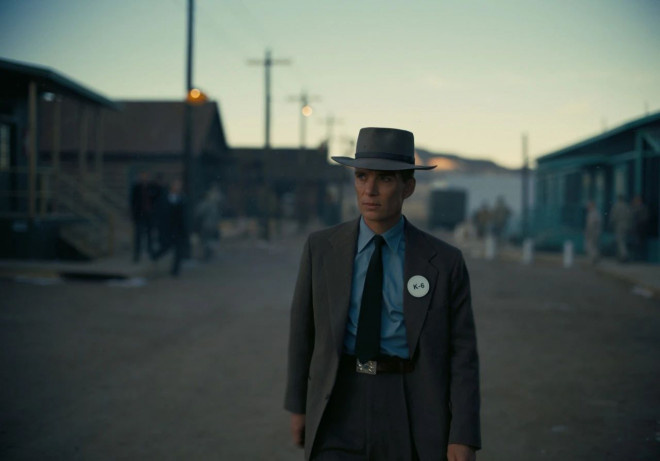
The conception of the film Oppenheimer is self-evident.
In December 2022, Biden’s government overturned the decision of the U.S. Atomic Energy Commission to revoke Oppenheimer’s safety license in 1954, saying that the revocation was "politically motivated" and was rehabilitated after many years, but Oppenheimer had already passed away in 1967.
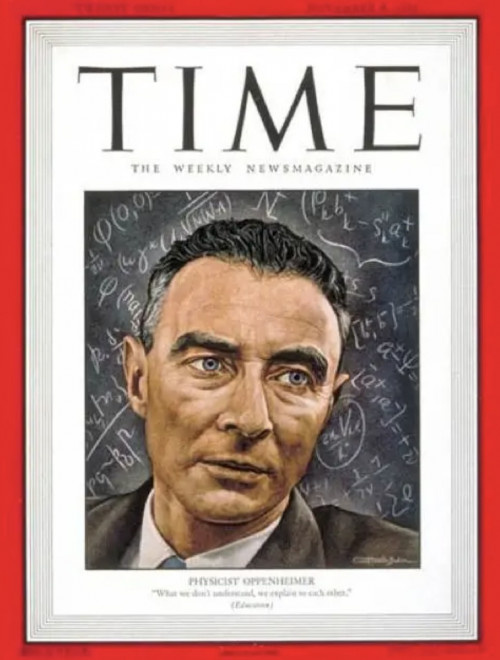
When Oppenheimer pressed the button to detonate the first atomic bomb that year, it might ignite the atmosphere and destroy the whole earth, which was an extraordinary moment in human history. From that moment on, mankind entered a brand-new nuclear age. Oppenheimer is faced with a moral dilemma like Prometheus. Prometheus stole the fire of the gods and passed it on to mankind, while Oppenheimer handed over the atomic bomb and delivered the unknown.
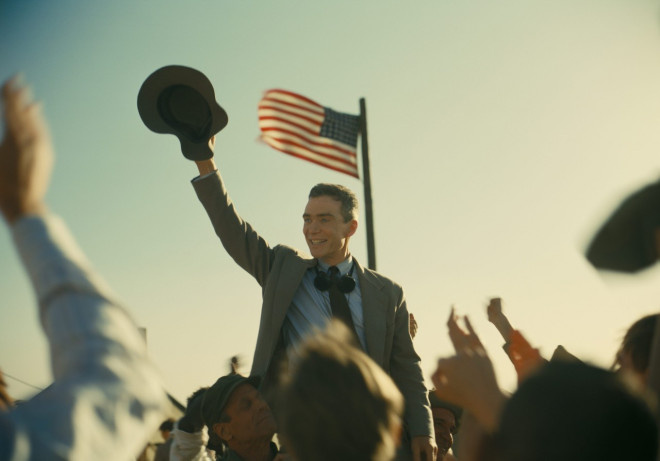
Through this history, we can get a glimpse that when the scientific community creates a new technology, the world may not be ready for it. Who should bear the series of lagging chain reactions caused by this? This is also the core theme that Oppenheimer wants to discuss with you — — Consequences.

Mapping to the current technological era, many top artificial intelligence researchers regard the present as their "Oppenheimer moment" and also regard Oppenheimer’s story as a warning. When scientists unlock a technology that may have unpredictable consequences, what kind of responsibility should they bear? The artificial intelligence problem that more and more people are beginning to worry about can be regarded as some kind of signal.

Oppenheimer didn’t give an answer to this, but it made an unavoidable presentation. After all, only in an open society, when people can acquire knowledge without restriction, can we "make a huge, complex, constantly changing, increasingly specialized and expert technical world still be a world shared by all mankind."
It is natural for scientists to seek scientific breakthroughs, and the responsibility of protecting the world from the negative impact of scientific progress should be borne by the whole society. This is Nolan’s reflection on society as an artist, and it also reflects the arc of responsibility and responsibility in his human nature.