A total of 131 items were included in the negative list of market access and then subtracted.
● Recently, the National Development and Reform Commission announced the "Negative List of Market Access (2019 Edition)" to the public, with a total of 131 items included, a reduction of 13% compared with 20 items last year. At the same time, 23 negative lists of market access compiled and published by various regions were cancelled, and the "one list for the whole country" system was more perfect.
● This year’s list has released a number of gold-bearing approvals, including "qualification approval of fire technical service institutions", "establishment approval of vocational skill appraisal institutions", "establishment permission of old-age care institutions" and "establishment permission of social welfare institutions". By further relaxing market access and breaking the entry threshold, the market vitality in the above fields will be effectively stimulated.
● The 2019 version of the negative list has improved the unified code system, which is unified with the codes used by local government information platforms and the codes of the unified credit management credit platform, creating conditions for better carrying out "one list and one network" in the future.
□ Our reporter Wan Jing
Recently, the National Development and Reform Commission announced the "Negative List of Market Access (2019 Edition)" (hereinafter referred to as the "Negative List of 2019 Edition") to the public, with a total of 131 items included, a decrease of 20 items compared with last year, with a reduction ratio of 13%. At the same time, 23 negative lists of market access categories compiled and published by various regions were cancelled, and the "one national list" system was more perfect.
It is understood that the 2019 version of the negative list is the first annual revision since the full implementation of the market access negative list system. In the form of list, the system clearly lists the industries, fields, businesses, etc. in which investment and operation are prohibited and restricted in China. Outside the list, all kinds of market entities can enter equally according to law. By innovating the government management and governance mechanism, the system provides a good institutional support for the whole economic operation and the breeding of the vitality of market players in China.
Since 2016, China has launched negative list pilots in Tianjin, Shanghai, Fujian and Guangdong provinces and cities. In 2017, the pilot scope was expanded to 15 provinces and cities. In December 2018, the National Development and Reform Commission and the Ministry of Commerce officially issued the Negative List of Market Access (2018 Edition) (hereinafter referred to as the Negative List of 2018 Edition), marking that China’s negative list system of market access has entered a new stage of full implementation.
The negative list continues to shorten.
Effectively stimulate market vitality
"It is a major feature of the 2019 version of the negative list to be short and short, and continue to promote the shortening of the negative list length." Guo Liyan, a researcher at the Institute of Market and Price of the National Development and Reform Commission, said.
Previously, the 2018 version of the negative list included two categories: "forbidden access" and "permitted access", with a total of 151 items and 581 specific management measures. Compared with the previous negative list of the pilot version, the number of items decreased by 177 and the number of specific management measures decreased by 288.
The revision of the negative list of the 2019 edition is based on the principles of accurate positioning, legality and effectiveness, unified standardization, and short energy. While further ensuring the stability and continuity of the negative list of the 2018 edition, it will be increased or decreased according to the actual situation. Judging from the revised results, there are currently 131 items and 568 management measures in the negative list of the 2019 edition, which is 20 items less than the original and 13 management measures.
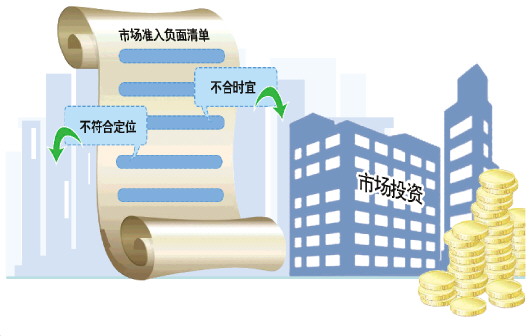
What licensing items will be reduced or removed from the negative list? First of all, it is inappropriate, and second, it does not conform to the positioning.
The most typical example of "untimely" is the licensing system of pawn industry. Due to some inconsistencies with the current economic and social development, this license has been removed from the negative list in 2019 after coordinating relevant departments.
At the same time, this revision has removed a large number of social regulations, national security regulations and other targets from the list, which has accurately defined the scope of application of the list and ensured the stability and continuity of the list. For example, measures such as "issuance of ship safety inspection certificate" and "approval of salvaging or dismantling sunken ships and objects in coastal waters" that do not meet the positioning of the list are removed.
In addition, the measures of the same object in different investment and operation links or similar objects in the same investment and operation link are optimized and merged to improve the convenience of using the list.
The reporter of Legal Daily noticed that this year’s list released a number of gold-bearing approvals, including the qualification approval of fire technical service institutions, the establishment approval of vocational skill appraisal institutions, the establishment permission of old-age care institutions and the establishment permission of social welfare institutions. By further relaxing market access and breaking the entry threshold, the market vitality in the above fields will be effectively stimulated.
Among the industries that have liberalized the market access threshold, the market opening for the establishment of licenses for old-age care institutions is the most eye-catching. With the aging of our country, the market development prospect of the old-age care industry is expected, and liberalizing the market access threshold of such industries will greatly promote the healthy development of the old-age care industry in China.
In fact, before the opening of the market for the aged care industry at the national level, some places have already tried first.
In February 2019, the Civil Affairs Department of Guangzhou City, Guangdong Province issued the Notice of the General Office of the Guangzhou Municipal People’s Government on Comprehensively Opening the Aged Care Service Market to Improve the Quality of Aged Care Services, explicitly canceling the license for the establishment of aged care institutions, implementing filing management according to regulations, and making efforts to relax market access, streamline examination and approval procedures, implement land security, reduce taxes and fees, improve service quality, and accelerate the development of aged care services by fully opening the market and improving service quality.
The circular pointed out that foreign investors are encouraged to set up private for-profit and non-profit pension institutions in Guangzhou. We will fully implement the fair competition review system in the field of aged care services. Non-local investors will enjoy the same policy treatment as local investors when holding aged care services. Private non-profit aged care institutions established by overseas investors will enjoy the same preferential policies as domestic investors, and it is forbidden to set additional conditions and access thresholds for social capital, non-local capital and overseas capital separately.
In September 2019, the Health and Health Commission of Zhengzhou City, Henan Province and other five departments issued the Notice on Strengthening the Examination, Approval, Registration and Filing of Institutions Combining Medical Care and Nursing Care, which clearly stipulated that the medical department in the old-age care institution would cancel the examination and approval, and the establishment of the old-age care institution would no longer be licensed, and the newly established institutions combining medical care and nursing care would implement the filing system.
Implement a national list
Actively achieve comprehensive coverage.
Why should we establish the management system of negative list of market access? According to Guo Liyan, the original market governance method may be more of a positive list and positive management method. As an investor in the market, if you want to enter a certain field, you need to go to the relevant authorities to check their relevant management documents before you can decide how to pass this procedure.
When the market access negative list system is established, what investors need to do is to see if there is this item on the negative list. If it has been listed, then it can’t be engaged; If it is not listed, you can invest and enter in the fields and industries not listed in the list and engage in related production and business activities.
This revision adheres to comprehensive coverage. Specifically, there are 5 items of prohibited access, 126 items of permitted access, 105 items of 18 national economic sectors, 10 items of Catalogue of Investment Projects Approved by the Government, 7 items of Catalogue of Prohibited Permissions for Internet Market Access, and 4 items of credit supervision and other matters.
What items have been retained in the 2019 negative list, or what items have been added?
It is understood that the negative list is included in the newly established access measures in time, and some access measures that meet the positioning of the list are added. According to the implementation of the 2018 version of the negative list, combined with the opinions of relevant departments and localities, a small number of access measures that meet the positioning of the list, such as "raw milk transportation, raw milk purchase station license" and "qualification examination and approval of waste electrical and electronic products processing enterprises", were included to improve the completeness of the list.
In addition, the negative list in 2019 further enriches local access measures. According to local opinions, after the legality review, the legally established access measures such as "issuance of approval certificate for health products (Jilin)" and "issuance of local railway operation license (including temporary operation license) (Hebei)" will be included to better take into account regional differences.
More importantly, in order to fully implement the "National One List" management requirements, the 2019 version of the negative list included the "negative list of industrial access in local national key ecological function area and major agricultural products producing areas (or prohibited restricted list)". So far, all the national market access management measures such as industrial structure, government investment, Internet and main functional areas have been included, and the "National One List" system has been improved.
In view of the problem of "too many negative lists", 23 market access negative lists compiled and published by various regions were cancelled, effectively putting an end to the situation of "negative lists flying all over the sky" and enhancing the seriousness, authority and unity of the lists.
Guo Liyan said: "With the gradual improvement of the dynamic correction mechanism of the negative list, more investors and enterprises may pay attention to the dynamic correction of this negative list every year. What content is removed from the list and what content is added to the list, and there may be more investors as the basis for supporting their strategic investment in the future. "
Gao Qin Wei, a professor at the Law School of Minzu University of China, believes that canceling the negative list compiled by each region and realizing the full coverage of national market access have effectively put an end to the phenomenon of "single-entry" and prohibiting and restricting market access. Only by adhering to "one list for the whole country" can China’s negative list system really play its role.
Unified coding of list items
Help optimize the business environment
According to Guo Liyan, another major feature of the 2019 version of the negative list is to clearly list the competent departments and complete the unified coding of the list items, "one network can be done at a glance".
On July 9, 2014, the State Council issued "Several Opinions on Promoting Fair Competition in the Market and Maintaining Normal Market Order", which clearly stated that it is necessary to build a modern market system that is unified, open, orderly in competition, honest and law-abiding, and with strong supervision, and accelerate the formation of a market supervision pattern with clear rights and responsibilities, fairness and justice, transparency and high efficiency, and legal protection, and called for the reform of the market access system and the establishment of a negative list of market access.
The 2018 version of the negative list brings revelry to market investors, but it also brings confusion, that is, although the approval items are clear, it is difficult to figure out who to look for. In particular, the same examination and approval items are expressed differently in different regions and at different levels, which makes market participants at a loss.
Guo Liyan introduced that the 2019 version of the negative list has improved the unified code system, which is unified with the codes used by local government information platforms and unified credit management credit platform codes, creating conditions for better carrying out "one list and one network" in the future.
"If you are the main market investor, you will find that the changes around you are very obvious after this list is published. The management mode of government-related departments has changed from positive, compartmentalized and procedural to a more flat, more open and transparent negative list operation mode. The main purpose is to stabilize the expectations of micro-subjects, and hope that micro-subjects dare to invest and are willing to invest. " Guo Liyan said.
Ren Qiming, an assistant professor at the School of Civil and Commercial Economics of China University of Political Science and Law, believes that market access should be further relaxed and government functions should be transformed on the basis of fairness, transparency and openness. In the market access, the examination and approval department should also be clear, open and transparent. On the one hand, listing the competent departments will help market participants to clearly know the government service departments for market access, on the other hand, it will also help to control the management of market access in China as a whole and macroscopically.
Ren Qiming believes that the premise of optimizing the business environment is the optimization of the market access mechanism. The revision of the negative list in the 2019 edition removed and liberalized some management measures, which means that the liberalization of the corresponding market access links is precisely to reform the institutional and institutional factors of market access from the source and further optimize the business environment.
Gao Qin Wei believes that the negative list of market access is constantly being "subtracted". No matter whether it is a state-owned enterprise, a private enterprise or a mixed-ownership enterprise, whether it is domestic or foreign, whether it is a large enterprise or a small or medium-sized enterprise, all of them are treated equally and enjoy the same market access conditions. At the same time, further standardizing the management authority and measures of governments at all levels in the market access link is conducive to breaking all forms of unreasonable restrictions and hidden barriers and stimulating the vitality of various market entities, especially the non-public economy.
Guo Liyan suggested that the hidden barriers in market access should be further removed in the future. Some market participants report that some items have been removed from the negative list of market access, but in the specific access process, they will still encounter such barriers. In the future, we should make a targeted list of hidden barriers, and investigate and solve them item by item.
Cartography/Gao Yue